
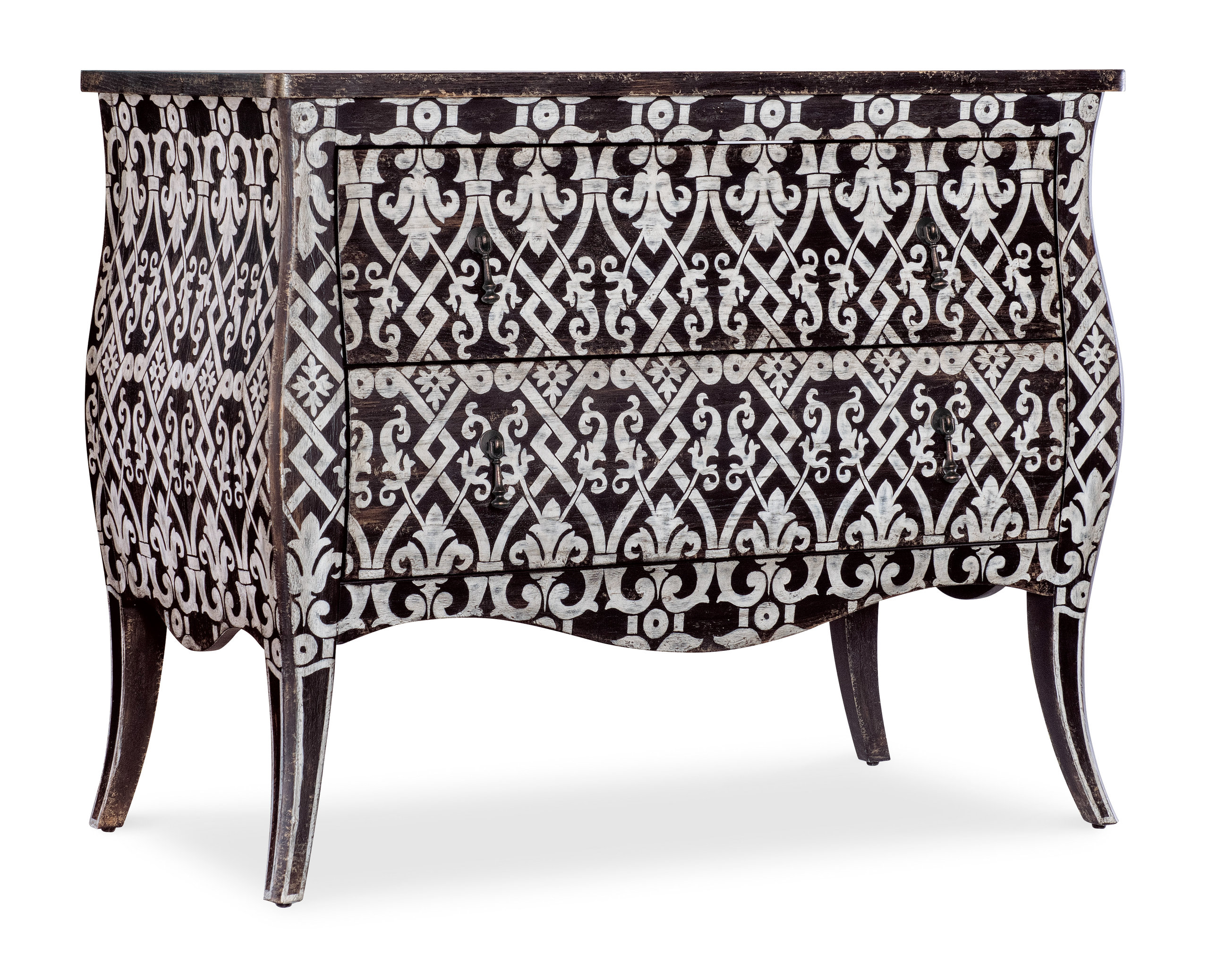
The morning light hits the curved, undulating profile of a statement chest positioned in a minimalist, neutral-toned loft, instantly breaking up the predictable monotony of straight drywall and linear modern sectionals. For decades, interior design swung violently toward the sterile and monochromatic, stripping homes of character in favor of flat-pack convenience and clinical clean lines. Yet, a quiet rebellion has taken root across contemporary residential spaces. Homeowners are actively searching for grounding focal points—furniture pieces that carry narrative, architectural weight, and tactile warmth.
Enter the Hooker Furniture Americana Two-Drawer Bombay Accent Chest, a striking manifestation of how classic history can be filtered through a contemporary aesthetic lens. Rooted in the rich rural heritage of American design traditions, this piece takes the notoriously dramatic bombé silhouette—a hallmark of baroque and rococo European furniture that migrated across the globe—and strips away the stuffy, overly gilded pretensions of the past. Instead of demanding a museum-like parlor, it fits seamlessly beside a contemporary performance-fabric sofa or anchors a high-rise foyer.
To understand why this specific accent chest resonates so deeply within modern interior architecture, one must look beyond its surface beauty. It represents an intricate dialogue between raw, natural timber textures and refined decorative motifs. By pairing a brooding, deep Molasses finish over quartered oak veneers with a hand-applied white fleur-de-lis pattern, the designers at Hooker Furniture solved a major dilemma for today’s decorators: how to introduce ornate historical shapes into informal, lived-in environments without making the room feel like a dusty antique showroom.
Tracing the Evolution of the Bombé Silhouette from Royal Palaces to Modern Lofts
The history of the bombé chest is a study in structural audacity. Originating from the French word meaning "swelling" or "blown out," the bombé form forced woodworkers to master compound curves, bulging outward on the sides and front to defy the rigid rectangular boxes that dominated furniture production for centuries. Historically, these pieces required master artisans who could steam, bend, and carve dense hardwoods while ensuring structural integrity. They were status symbols found in European royal courts and stately colonial homes, prized for their ability to catch candlelight and cast dramatic shadows.
Fast forward to the current era, and the Hooker Furniture Americana collection successfully translates this complex geometry for 2026 living standards. Rather than relying on fragile, high-gloss lacquers or hyper-fragile marquetry that restricts daily use, the Americana Bombay Chest is engineered for real life. It utilizes durable oak veneers that showcase the organic grain of the wood beneath a deeply saturated Molasses finish. This dark, earthy tone anchors the piece, while the contrasting white fleur-de-lis pattern softens the visual weight of the sweeping silhouette.
This marriage of historical form and modern durability addresses a core shifting priority in interior styling. Today’s spaces demand functional art. People no longer want furniture that sits behind a velvet rope; they want surfaces that hold charging stations, art books, and morning coffee cups while still commanding the room’s visual hierarchy. The bombé profile provides a sensual, organic curve that acts as an architectural antidote to the boxy, algorithmic architecture of modern apartment complexes and suburban tract homes.
Materiality, Finish Dynamics, and the Tactile Appeal of Oak Veneers
When evaluating high-end accent furniture, material integrity remains the ultimate differentiator between fleeting trends and generational investments. The construction methodology behind the Americana Bombay Chest relies on select hardwood solids and premium oak veneers. Veneering is often misunderstood by consumers who mistake it for a sign of cheap construction; in reality, master cabinetmakers use cross-banded veneer techniques to prevent the wood from warping, cracking, or splitting as indoor humidity fluctuates across changing seasons.
The tactile experience of this chest centers on its contrasting finishes. The exterior is coated in the signature Molasses finish, a dark, complex wash that allows the natural cathedral grain of the oak to telegraph through. Over this dark ground sits the crisp white fleur-de-lis pattern, hand-detailed to evoke a sense of weathered folk art rather than factory-stamped perfection. Pulling open the two self-closing drawers reveals a stunning visual surprise: a warm Honey-finished interior that contrasts sharply with the brooding exterior, adding an extra layer of artisanal craftsmanship.
Complementing this woodcraft is the hardware selection. The chest features custom-designed metal alloy teardrop pulls finished in an antique bronze. This choice of hardware bridges the gap between old-world ironmongery and modern industrial design. The teardrop profile swings fluidly, offering an ergonomic grip while reinforcing the vertical rhythm of the chest. In contemporary design, tactile variety—pairing smooth wood, cool metal, and matte paint—is what gives a room soul, keeping the eye engaged across different lighting conditions throughout the day.
Strategic Spatial Integration and Room Layout Methodologies
Integrating a piece as visually potent as a bombé chest requires a deliberate spatial strategy. Because of its distinctive curved sides and bulging front profile, the chest demands breathing room. Shoving it tightly into a dark hallway corner or squeezing it between two massive recliners robs the silhouette of its theatrical impact. Instead, interior architects and stylists rely on specific spatial frameworks to maximize its presence in living rooms, entryways, and primary suites.
Executing a successful placement requires careful consideration of scale, lighting, and surrounding negative space. The following methodology ensures the chest commands the room without causing visual clutter:
- Assessing Spatial Clearance: Ensure at least six to twelve inches of negative space on either side of the chest so the curved bombé profile can be appreciated from multiple viewing angles.
- Balancing Wall Scale: Hang a single, oversized round mirror or a vertically oriented abstract painting directly above the chest to echo or contrast its organic curves, avoiding small, cluttered gallery walls that compete for attention.
- Optimizing Lighting Conditions: Position a directional table lamp or a nearby floor uplight to graze the textured oak grain and highlight the subtle hand-painted white fleur-de-lis pattern against the dark Molasses finish.
- Styling Surface Surfaces: Keep tabletop decor restrained; a heavy ceramic vase, a stacked duo of linen-bound design books, and a single sculptural object are enough to style the top without obscuring the wood surface.
- Anchoring Traffic Flow: Place the chest in low-traffic transitional zones where guests will naturally pause, such as a wide foyer landing or the terminal wall of an open-plan living and dining area.
Navigating Styling Pitfalls and Advanced Practitioner Workarounds
Even experienced home decorators occasionally stumble when working with heavily patterned or historically derived statement furniture. The biggest danger lies in either suffocating the piece with matching antique decor—turning the room into a period-piece movie set—or letting it float awkwardly in a sterile modern box without any contextual bridging elements. Achieving a balanced, high-end look requires understanding how to counteract stylistic extremes.
Avoiding these common interior design missteps prevents the room from feeling disjointed or overdone. Seasoned stylists utilize specific workarounds to keep historical statement chests feeling fresh and current:
- Pitfall 1 (Period Overload): Surrounding the chest with matching rustic or antique furniture makes the space feel heavy and dated. Practitioner Workaround: Pair the chest with ultra-modern elements, such as a brushed steel frame chair, a sleek concrete coffee table, or abstract minimalist art to create dynamic visual tension.
- Pitfall 2 (Ignoring Scale and Depth): Forgetting that bombé chests project further outward than standard flat-front credenzas, leading to cramped walkways. Practitioner Workaround: Measure the exact clearance depth at the widest point of the curve before purchasing, ensuring standard walking paths maintain a minimum thirty-six-inch clearance.
- Pitfall 3 (Monochromatic Overkill): Placing the dark Molasses finish against dark-painted or charcoal walls, causing the piece to completely disappear. Practitioner Workaround: Set the chest against high-contrast backdrops like soft warm-white, greige, or limewashed walls to make the dark oak silhouette pop.
- Pitfall 4 (Cluttered Surface Styling): Overcrowding the top surface with too many small decorative objects, which competes with the intricate white fleur-de-lis exterior motif. Practitioner Workaround: Embrace the rule of three, utilizing one tall vertical element, one low functional tray, and one asymmetrical organic object.
- Pitfall 5 (Neglecting Practical Storage Needs): Treating the piece purely as visual art and trying to store heavy, bulky items in self-closing drawers meant for lighter accessories. Practitioner Workaround: Use the smooth self-closing drawers for entry essentials, linens, or media accessories, preserving the mechanism’s alignment and longevity.
The Broader Shift Toward Craftsmanship and Emotional Resonance in Interior Design
The enduring popularity of pieces like the Americana Bombay Chest signals a broader psychological shift in consumer behavior within the home furnishings market. For years, the market was flooded with disposable, transient decor designed to last a single lease cycle. By 2026, homeowners have increasingly rejected this cycle of waste, pivoting instead toward items that tell a story, honor traditional manufacturing techniques, and offer heirloom potential.
This philosophy aligns with the principles of warm minimalism and curated eclectic design. People want their homes to reflect a life well-traveled and deeply felt, rather than a page torn straight from a mass-market retailer’s catalog. Historical design motifs, when reinterpreted with modern finishes like the Molasses and Honey dual-tone oak treatment, bridge the generational divide. They appeal to younger buyers seeking character while satisfying traditionalists who appreciate superior joinery and structural presence.
Furthermore, the integration of functional modern features—such as self-closing drawer glides concealed within a historic silhouette—proves that historical reverence does not require sacrificing modern convenience. This synthesis of old-world aesthetic romance and twenty-first-century mechanical reliability represents the pinnacle of modern furniture engineering. It allows spaces to function effortlessly for remote work, digital entertainment, and daily family life while maintaining an atmosphere of timeless elegance.
Actionable Recommendations for Curating Your Space Around Statement Accent Chests
Transforming a house into a cohesive home requires a disciplined approach to curation, ensuring that every statement piece works in concert with the broader architectural envelope. When introducing a historically rich accent chest into your floor plan, you must treat it not as an isolated purchase, but as the anchor of a curated vignette.
Implementing a systematic approach guarantees that your investment elevates your home’s aesthetic and practical utility for years to come:
- Audit Your Lighting: Evaluate natural daylight patterns in your room to ensure the Molasses finish receives adequate illumination without being washed out by harsh, direct afternoon sun glare.
- Establish a Metal Palette Limit: Match the antique bronze teardrop pulls of the chest with subtle hardware or frame accents elsewhere in the room, such as lamp bases, picture frames, or curtain rods, to create visual harmony.
- Prioritize Function First: Decide the primary utility of the drawers before styling the room—whether it houses dining linens in an open-plan great room, electronics in a living space, or daily accessories in a grand entryway.
- Layer Textures Thoughtfully: Balance the dense oak wood grain and painted exterior with softer surrounding textiles, such as boucle upholstery, raw linen drapery, or a vintage wool area rug.
The Hooker Furniture Americana Bombay Chest proves that historical design does not have to remain trapped in the past. By reinterpreting the dramatic bombé silhouette through modern finishes, durable oak veneers, and subtle folk-art motifs, it bridges the gap between historical reverence and contemporary living. It challenges us to look at our living spaces not as sterile functional boxes, but as living galleries of personal history and tactile comfort.
As interior design trends continue to evolve, the demand for soulful, story-driven furniture will only accelerate. Investing in pieces that successfully marry the craftsmanship of yesteryear with the mechanical performance of today ensures your home remains grounded, inviting, and enduringly stylish. Take the time to evaluate your own living spaces, find that one neglected corner or transitional wall, and let a statement of historical reinvention transform the entire atmosphere of your home.


