
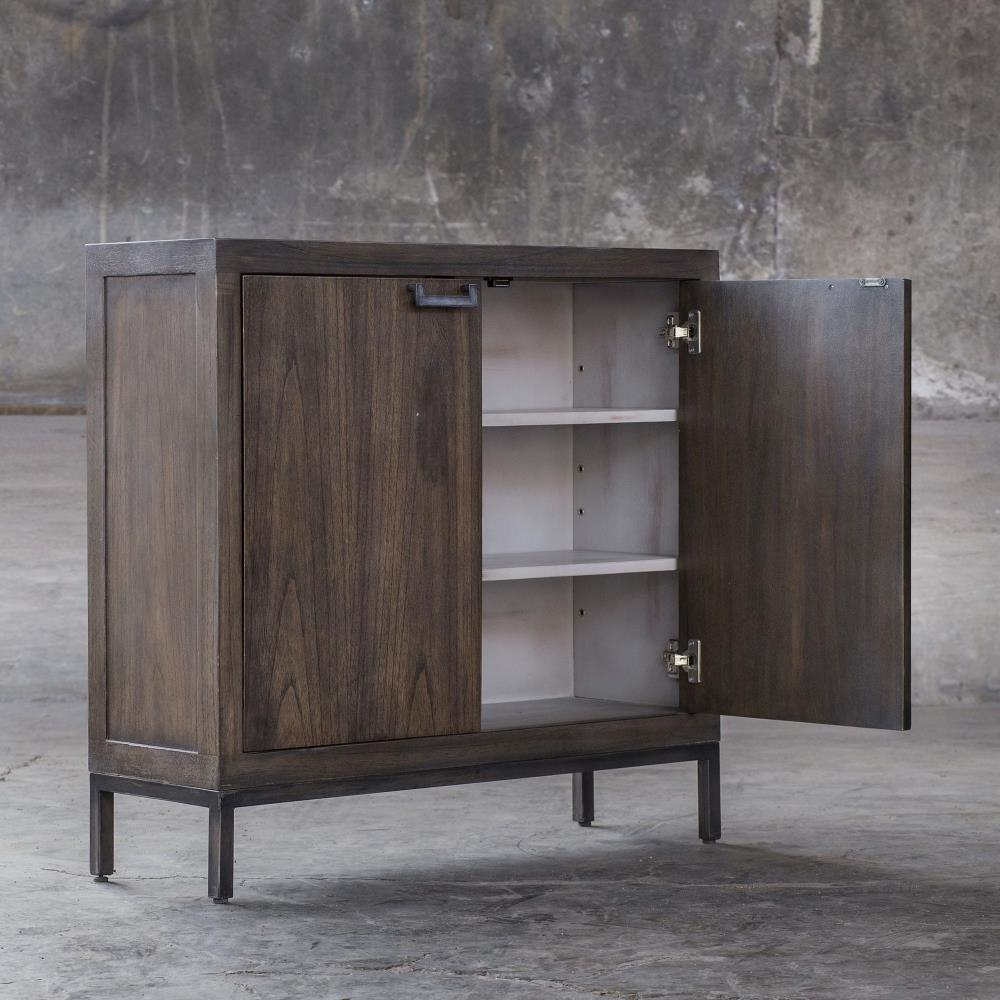
The tape measure hits the hardwood floor with a sharp metallic clack, matching the cadence of a frustration familiar to any urban apartment dweller. You have six feet of empty wall space between a doorway and a structural column, an awkward dead zone begging for functionality. Standard sideboards yawn outward with a punishing eighteen-inch depth, turning narrow hallways into obstacle courses. Meanwhile, flimsy flat-pack consoles wobble under the weight of a ceramic lamp, exposing the compromises of mass-market furniture design.
Enter the quiet geometry of a well-executed narrow console. When furniture designer Matthew Williams conceptualized the Nadie storage piece for Uttermost, he was addressing this exact spatial tyranny. Measuring a slender twelve inches deep while stretching thirty-six inches wide, the cabinet solves a geometric puzzle that frustrates interior stylists daily. It offers substantial floor presence without claiming precious square footage, proving that utility and grace can coexist in tight architecture.
Great furniture does not happen by accident; it emerges from a dialogue between raw organic matter and industrial precision. Williams approached the Nadie collection not as a mere storage box, but as an exercise in architectural balance. By marrying the unpredictable, living grain of Indonesian mango wood with cold-rolled iron structural elements, he created an object that refuses to sit quietly in the background. It is a piece built for the realities of contemporary living spaces, where every square inch carries weight and every visual element must earn its place.
The Anatomy of Material Selection and Sustainable Sourcing
Understanding the Nadie cabinet requires starting at its botanical roots in the lush forests of Indonesia, where artisan forestry meets modern manufacturing compliance. Mango wood has quietly revolutionized the contemporary furniture market over the last decade, transitioning from an agricultural byproduct into a prized material for high-style design. Once a mango orchard tree passes its fruit-bearing prime—typically after fifteen to twenty years—it becomes brittle and unproductive. Harvesting these exhausted trees for timber not only clears space for new saplings but yields dense, richly figured hardwood with unique character marks, spalting, and tonal variations.
Williams leveraged this specific wood species for its exceptional grain density and environmental profile. Unlike slow-growth hardwoods like white oak or American walnut, mango wood grows rapidly, making it an inherently sustainable choice for environmentally conscious consumers navigating the market in 2026. However, working with mango wood introduces distinct technical hurdles. Its high natural oil content and varied density mean that standard drying processes can lead to warping if not managed with absolute precision. Uttermost addresses this by pairing solid mango wood door panels and framing with CARB Phase 2 compliant MDF internal components. This engineering choice stabilizes the core structure against seasonal humidity swings, ensuring that doors hang square and drawers glide smoothly whether placed in a damp coastal bungalow or a dry desert loft.
The surface treatment is where the design transcends standard rustic fare. The cabinet features what the manufacturer designates as a Paris silver finish—a nuanced technique where a subtle, metallic silver layer is misted over a warm light walnut stain. This dual-layer finishing process avoids the flat, monotonous look of cheap silver paint. Instead, the underlying golden-brown tones of the mango wood peek through the metallic topcoat, creating a dynamic visual texture that shifts under changing interior lighting conditions. In morning sun, the warmth of the walnut predominates; under evening LED downlights, the silver highlights catch the beam, lending the piece an understated, contemporary glamour.
Structural Engineering and the Physics of Slim Profiles
A twelve-inch depth is a double-edged sword in furniture design. While it makes the cabinet ideal for entryways, hallways, and compact dining rooms, it introduces a dangerous center of gravity once the doors are swung open and loaded with heavy tableware or stacked art books. If the base is too light or the footprint too narrow, the entire assembly risks tipping forward. Williams solved this physical vulnerability by anchoring the timber body atop a heavy, geometric iron base finished in an aged steel patina.
This iron framework acts as a structural skeleton, redistributing the downward and outward loads of the cabinet body. The base is not merely decorative; its welded joints and rigid cross-members provide torsional rigidity that keeps the mango wood housing from twisting over time. Furthermore, elevating the wooden cabinet on slender metal legs creates visual negative space beneath the piece. By allowing light to pass underneath the storage volume, the eye perceives the room as larger and less encumbered, a crucial design trick for small footprint living.
Hardware integration further reveals the thoughtfulness of the design. The coordinating door pulls are cast and finished to match the aged steel of the base, creating a seamless visual rhythm that frames the doors. Inside the cabinet, two adjustable mango-veneered shelves rest on heavy-duty brass-plated shelf pins, allowing users to customize the interior vertical storage to accommodate everything from tall liquor bottles to stacked porcelain bowls. The concealed European-style hinges allow for micro-adjustments in three dimensions, ensuring that the tight tolerances between the doors remain pristine even after years of daily opening and closing.
Integrating the Nadie Cabinet into Modern Interior Layouts
Positioning a compact, silver-touched wood cabinet in an established room requires a delicate touch to avoid looking like a showroom staging mistake. Because the piece bridges rustic warmth and soft contemporary styling, it acts as a chameleon across various design languages. In a minimalist apartment featuring polished concrete floors and stark white drywall, the textured mango wood grain and Paris silver finish introduce necessary organic warmth and tactile variation, breaking up the harshness of industrial surfaces.
In transitional spaces, the cabinet shines as an accent console behind a floating sofa or as a sophisticated bar station in a dining nook. The twelve-inch depth means it slips effortlessly into narrow transitional hallways where traditional credenzas would block foot traffic or catch clothing. Stylists frequently top the Nadie with a tall, asymmetrical ceramic table lamp, a stack of oversized coffee table books, and a single bronze sculpture. This vertical arrangement draws the eye upward, accentuating the relatively modest thirty-four-and-a-half-inch height of the unit and making the surrounding wall feel taller.
For media and tech concealment, the cabinet offers a clever alternative to bulky media consoles in secondary rooms like guest bedrooms or home offices. While it lacks built-in wire management ports—a deliberate omission to preserve its clean exterior lines—crafting a discreet rear-panel passthrough with a standard hole saw is a straightforward modification for users wishing to house a small streaming hub or charging station. The adjustable shelving accommodates peripheral gear easily, keeping unsightly cords out of sight while maintaining the room’s polished aesthetic.
Step-by-Step Implementation and Styling Methodology
- Step 1 (Site Survey and Spatial Mapping): Measure your intended wall space twice, accounting for baseboard moldings and door swing clearances. Ensure that the thirty-six-inch width and twelve-inch depth leave at least six inches of breathing room on either side to prevent the furniture from looking wedged into submission.
- Step 2 (Unboxing and Acclimatization): Carefully unpack the cabinet on a clean, non-abrasive surface. Because solid wood responds to ambient temperature and humidity shifts, allow the cabinet to sit in its intended room for forty-eight hours before loading weight onto the shelves.
- Step 3 (Base and Leveling Inspection): Check the iron base for stability on hard floors or low-pile rugs. Utilize adjustable felt leveling pads beneath the metal feet if your historic flooring dips or slopes, ensuring the cabinet body remains completely plumb so the doors close evenly.
- Step 4 (Interior Organization & Weight Distribution): Position the two adjustable interior shelves based on your storage needs. Place heavier items like ceramic serveware or glassware on the bottom shelf to maintain a low center of gravity, reserving the top shelf for lighter linens or accessories.
- Step 5 (Surface Styling and Lighting Interplay): Curate the top surface with items varying in height and texture. Pair a metallic tray that picks up the Paris silver finish with a living plant or organic ceramic vase to bridge the industrial base with the natural wood top.
Common Pitfalls, Maintenance Errors, and Field-Tested Workarounds
- Pitfall 1 (Overloading the Slim Profile): Because the cabinet is only twelve inches deep, users often attempt to stack heavy items precariously near the front edge, risking instability or door interference. Workaround: Always push items toward the back wall of the interior cabinet, and utilize the adjustable shelving to distribute weight evenly across the iron structural frame.
- Pitfall 2 (Harsh Chemical Cleaning): Spraying conventional multi-surface household cleaners directly onto the Paris silver and light walnut finish can strip the protective topcoat and cloud the metallic sheen. Workaround: Dust regularly with a dry, soft microfiber cloth, and use a barely damp cloth with mild castile soap only when confronting stubborn smudges, drying immediately afterward.
- Pitfall 3 (Ignoring Humidity Fluctuations): Placing solid mango wood furniture directly in front of active heating vents or uninsulated exterior walls can cause wood expansion, joint separation, or finish cracking. Workaround: Maintain indoor relative humidity between thirty and fifty percent using HVAC controls or room humidifiers, keeping the cabinet at least two feet away from direct heat sources.
- Pitfall 4 (Neglecting Floor Protection): The rigid iron base features heavy metal contact points that can scratch hardwood floors or snag delicate wool area rugs when shifted for cleaning. Workaround: Apply high-density felt pads or custom silicone boots to the bottom of the iron feet before sliding the unit into its final resting place.
- Pitfall 5 (Improper Door Alignment Adjustments): Yanking or forcing doors that have shifted slightly during transit will strip the hinge mounting screws out of the engineered wood core. Workaround: Consult the adjustment screws on the European hinges—turning the front screw adjusts side-to-side overlay, while the rear screw controls depth—to gently realign doors in seconds.
The Broader Context of Compact Transitional Design
The enduring appeal of pieces like the Nadie cabinet reflects a broader cultural shift in how we inhabit our living spaces. As urban real estate prices climb and square footage per capita shrinks, consumers are rejecting disposable, flat-pack furniture in favor of heirloom-quality accent pieces that deliver maximum impact per square foot. We are witnessing the death of the oversized, monolithic entertainment center and the rise of purposeful, multi-functional micro-storage.
Matthew Williams understood that modern design cannot rely on sheer scale to command attention. Instead, it must rely on material honesty, textural contrast, and impeccable proportions. By combining Indonesian mango wood with industrial iron, the design bridges two seemingly contradictory worlds: the warmth of traditional craftsmanship and the crisp geometry of modern urbanism. This synthesis ensures that the piece does not feel dated as transient decor trends cycle through the design media landscape.
Furthermore, the emphasis on responsibly harvested agricultural timber points toward a more mature manufacturing ecosystem. Consumers increasingly demand transparency regarding where their materials originate and how long their furnishings will last. A well-constructed cabinet featuring a robust iron chassis and solid wood panels resists the landfill economy, offering a sustainable anchor for homes that value both aesthetic integrity and ecological mindfulness.
Strategic Recommendations and Long-Term Value Framework
Investing in designer accent furniture requires a strategic evaluation of cost, versatility, and build quality. At its price point, the Uttermost Nadie cabinet occupies the sweet spot between mass-market retail and custom millwork. To extract maximum value from this investment, consider the piece as a modular asset in your home decor portfolio rather than a permanent fixture tied to a single room or color scheme.
If you relocate from a downtown high-rise apartment to a suburban home, the cabinet transitions effortlessly from an entryway drop-zone console to a sophisticated bar cabinet in a formal dining room or a linen storage chest in a guest suite. Its neutral yet striking silver-wash finish pairs seamlessly with cool gray palettes, warm terracotta tones, and moody charcoal walls alike.
When planning your room layout, treat the cabinet as a sculptural focal point rather than a hidden storage utility. Let the light hit the silver-misted grain, and allow the negative space beneath the iron legs to keep your floors looking expansive. By selecting pieces engineered with this level of spatial intelligence, you stop fighting your architecture and start making it work for you.
The humble console cabinet rarely receives the architectural praise lavished upon cantilevered staircases or bespoke kitchen islands, yet it does the heavy lifting of daily domestic life. It catches our keys, houses our cherished tableware, and anchors an empty wall with quiet dignity. Matthew Williams and the artisans at Uttermost elevated this functional necessity into an exercise in thoughtful material restraint.
As we look toward the future of interior design, the demand for intelligent, space-saving engineering will only accelerate. We will continue to ask our living spaces to do more with less, demanding beauty without bulk and sustainability without sacrifice. The Nadie cabinet stands as a quiet blueprint for how to meet that challenge—proving that with the right materials, expert engineering, and a sharp eye for proportion, twelve inches of depth is all you need to transform a room.


