Run your thumb across a conventional factory-finished black laminate, and you encounter a uniform, cold slickness—a chemical slick that hides everything underneath. Now, drag your fingertips over a properly executed charred black finish on a pine veneer. The experience is radically different. You feel the sharp, alternating ridges of latewood and earlywood, the micro-crackle of a carbonized skin that absorbs ambient light rather than reflecting it, and the subtle, ghost-like topography of knots peering through an ink-dark veil. It is a surface that forces you to reach out and touch it.
In contemporary architecture and high-end furniture design, this tactile friction has turned heads away from flawless plastics and uniform paints. Designers and makers are hunting for surfaces with a pulse. Pine veneer, once dismissed as a cheap utility material or a knotty relic of mid-century suburban rec rooms, has undergone a radical stylistic metamorphosis. When subjected to controlled thermal devastation and meticulous post-processing, standard pine yields a finish that is visually bottomless, texturally aggressive, and utterly unique to every individual sheet harvested from the log.
Understanding this aesthetic requires a journey into the collision between ancient Japanese pyrotechnic preservation and modern industrial slicing techniques. It is an exploration of how fire alters the fundamental chemistry of cellulose, how softwoods behave under extreme heat, and why a thin skin of sliced wood can capture an intensity of shadow that flat black pigments can never hope to replicate.
The Botanical Anatomy of Pine Veneer Under Thermal Assault
To understand why charred pine looks the way it does, you must first look at the wood’s microscopic architecture. Pine is a softwood, but that botanical classification is misleadingly simple. It grows in distinct annual rings composed of two contrasting materials: earlywood, which is soft, pale, and porous, laid down during the rapid growth spurts of spring; and latewood, which is dense, dark, and resinous, formed as growth slows down in the late summer and autumn. When a sheet of pine veneer—typically sliced at a thickness between 0.5mm and 3mm—is exposed to an open flame or high-temperature kiln, these two zones react completely differently.
The earlywood scorches quickly, burning away into a delicate layer of powdery ash, while the dense, resin-rich latewood resists the burn longer, retaining a firmer, more structural carbon shell. When a maker brushes away the loose ash using a specialized horsehair or nylon-abrasive wheel, a dramatic relief effect emerges. The soft earlywood dips inward, while the tough latewood stands proud. This differential burning creates a three-dimensional topography that standard liquid wood stains simply cannot mimic. A stain colors a flat plane; fire reshapes the plane itself.
Furthermore, pine is loaded with natural turpentines, rosins, and extractives. When intense heat hits these compounds, they bubble, caramelize, and carbonize directly within the upper cellular matrix. This internal cooking process fuses the carbon layer to the underlying wood fibers at a molecular level. Instead of sitting on top of the substrate like a film-forming paint, the black finish becomes an integral part of the veneer’s surface chemistry. The result is a matte, light-absorbing skin that possesses a deep, velvety charcoal hue rather than the harsh, mirror-like gloss of synthetic lacquers.
Slicing, Stability, and the Engineering of Thin-Layer Charring
Charring solid pine boards is a relatively straightforward affair, practiced for centuries in traditional carpentry. Charring pine veneer, however, is an exercise in high-stakes structural engineering. Veneer is exceptionally thin, making it vulnerable to warping, curling, and outright incineration if the heat source lingers for even a fraction of a second too long. Achieving a pristine charred black finish on a paper-backed or phenolic-backed pine veneer requires a delicate balance between thermal input and substrate stability.
Modern architectural projects often rely on rotary-cut or quarter-sliced pine veneers laminated onto stable engineered cores like MDF or baltic birch plywood. This composite construction solves the natural tendency of solid pine to cup and twist as moisture levels fluctuate, but it introduces a new constraint: the glue line. The adhesives used to bond the veneer to the core must possess high thermal resistance to prevent delamination during the burning phase. Master fabricators typically use cross-linked polyvinyl acetate (PVA) formulations or specialized thermosetting resins that can endure surface temperatures exceeding 1,000 degrees Fahrenheit without releasing their grip.
Once laminated, the panel is subjected to precise thermal profiling using industrial propane torch arrays or continuous infrared baking lines. The goal is to carbonize only the uppermost micro-layers of the wood veneer, leaving the structural integrity of the underlying sheet entirely uncompromised. This requires calibrated speed, uniform torch-to-surface distance, and immediate water quenching or air-cooling to halt the thermal reaction the exact moment the desired depth of char is reached. It is a process that marries ancestral craftsmanship with the exacting tolerances of modern millwork production.
Step-by-Step Methodology for Executing a Professional Charred Black Pine Finish
For woodworkers and interior designers looking to specify or execute this finish manually, precision and patience are paramount. Skipping a step or rushing the brushing phase will result in a muddy, uneven smudge rather than the crisp, high-contrast black texture characteristic of premium charred wood.
- Step 1 (Substrate Preparation & Selection): Select high-grade pine veneer with tight, clean grain patterns—radiata or southern yellow pine works exceptionally well due to their pronounced density variance between earlywood and latewood. Sand the raw veneer smooth with 120-grit sandpaper to remove any mill glaze or handling marks, then wipe the surface completely clean of dust and debris.
- Step 2 (Controlled Thermal Carbonization): Using a wide-head propane torch connected to a regulated fuel tank, sweep the flame evenly across the veneer surface at a steady pace. Keep the torch moving constantly in smooth, overlapping passes to avoid localized burn-through. Continue until the entire surface is uniformly covered in a matte, alligator-skin black alligator crust.
- Step 3 (Immediate Thermal Quenching): Immediately after burning, apply a fine mist of water using a spray bottle or wipe the surface with a damp cloth to halt the combustion process deep within the wood fibers. Allow the veneer panel to dry completely in a climate-controlled environment to stabilize its moisture content before proceeding.
- Step 4 (Mechanical Texturing and Brushing): Mount a medium-stiff nylon abrasive wheel or natural tampico brush onto an angle grinder or drill press. Gently sweep the rotating brush across the charred surface in the direction of the grain. This mechanical action strips away the loose, powdery surface ash while leaving the deep-seated carbon intact within the grooved grain structure.
- Step 5 (Sealing and Topcoat Application): Lock in the delicate carbon layer by applying a clear, non-yellowing matte water-based polyurethane or hardwax oil. Apply the first coat lightly by spraying or gentle wiping to avoid dissolving or smearing the carbon dust, followed by a final protective topcoat for long-term durability and scratch resistance.
Navigating Common Pitfalls and Material Limitations in Burned Wood Production
Even experienced fabricators frequently stumble when transitioning from solid timber to thin pine veneers. The most common error involves excessive heat application, which instantly burns through the thin veneer layer and exposes the underlying glue line or core material. Pine is particularly volatile due to its resin pockets; a pocket can ignite violently, creating an unsightly crater that ruins the entire sheet. To counteract this, practitioners must pre-inspect veneer stock for erratic resin concentration and maintain a constant, sweeping motion with the heat source rather than lingering over knots or figured areas.
Another frequent failure occurs during the brushing and cleanup phase. If the operator uses a wire brush that is too stiff or applies excessive downward pressure, they will strip away not just the loose ash, but the charred earlywood itself, revealing the raw, pale yellow pine underneath in jagged, unattractive patches. The golden rule of charred veneer finishing is that the brush should do the work through rotation speed, not muscle. Let the tips of the bristles gently sweep out the soot without gouging the delicate carbon skeleton.
Moisture management also presents a continuous hazard. Charred wood is exceptionally dry and acts like a sponge for airborne humidity or liquid finishes. Applying solvent-based varnishes directly over loose carbon dust can lead to an uneven, blotchy sheen and poor adhesion. Always vacuum the brushed surface meticulously with a horsehair brush attachment, followed by a tack cloth, before applying any liquid sealing agents. Choosing the right sealant is equally critical; high-gloss finishes ruin the organic, light-absorbing quality of the char, while low-sheen matte formulations preserve the authentic, tactile depth of the burnt surface.
Architectural Versatility and the Evolution of Modern Aesthetic Preferences
The resurgence of the charred black finish on pine veneers aligns with a broader shift toward biophilic design and wabi-sabi aesthetics—the appreciation of imperfection, transience, and natural materials. Historically rooted in the Japanese Yakisugi (often mistranslated as Shou Sugi Ban) tradition, where cedar boards were charred to provide natural weather-proofing and fire resistance for coastal buildings, the technique has evolved from an agrarian survival tactic into a high-design statement.
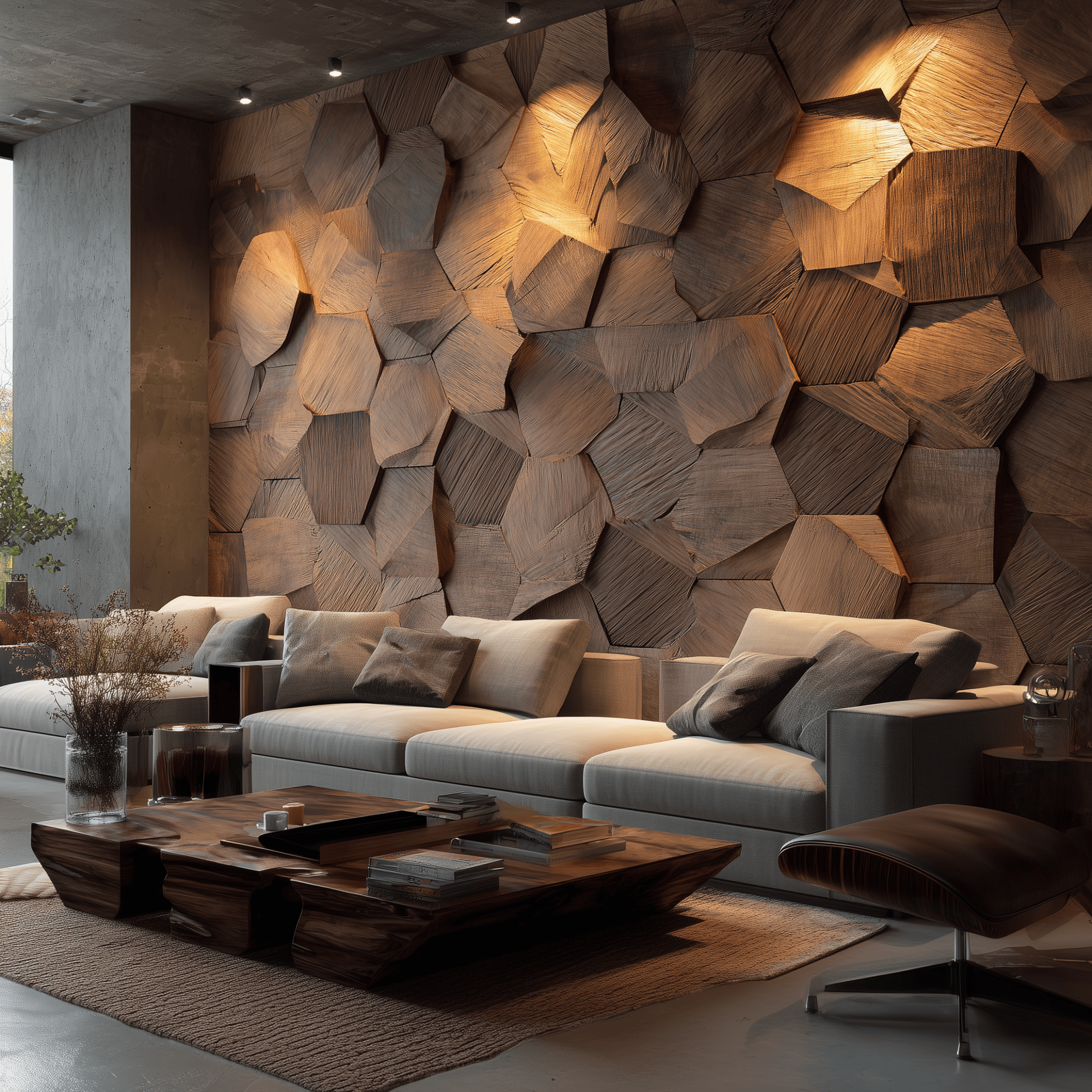
On pine veneers, this finish bridges the gap between raw industrial grit and refined architectural minimalism. In high-end residential interiors, charred pine veneer panels are increasingly specified for statement walls, custom millwork, monolithic kitchen islands, and bespoke cabinetry doors. The dramatic black surface plays brilliantly against raw concrete, polished brass hardware, and warm natural textiles like linen and leather. Because the burning process accentuates the natural irregularities of the wood, no two veneered panels are ever identical, giving large-scale architectural installations an organic variation that mass-produced laminates cannot replicate.
Furthermore, utilizing fast-growing plantation pine as a veneer base offers significant ecological advantages over harvesting slow-growth exotic hardwoods for dark-toned surfaces. By taking an abundant, economical softwood and transforming its visual identity through thermal modification, designers achieve the luxurious look of charred exotic timber while maintaining a responsible, sustainable material chain. It is an intersection of ancient craft intelligence and modern ecological mindfulness that continues to drive the popularity of burnt wood surfaces forward.
Strategic Frameworks for Specifying and Maintaining Charred Pine Surfaces
To ensure that charred black pine veneer installations maintain their striking visual impact over years of daily interaction, specifiers and fabricators must establish rigorous protocols for installation, environmental control, and ongoing maintenance.
- Environmental Conditioning: Install charred pine veneer panels only in climate-controlled interior spaces where relative humidity is maintained between 30% and 50% to prevent seasonal wood movement and veneer checking.
- Handling Protocol: Require installers to wear clean cotton gloves during handling to prevent natural skin oils from staining or marking the porous, matte carbon finish.
- Routine Maintenance Schedule: Dust interior charred wood surfaces weekly using a soft-bristled brush attachment or a dry microfiber cloth to prevent particulate buildup within the deeply textured grain relief.
- Repair and Touch-Up: Keep a bottle of concentrated black wood dye or specialized touch-up charcoal pigment on hand to seamlessly disguise minor scratches or edge-impact duresse without compromising the surrounding texture.
- Surface Protection: Specify high-performance waterborne acrylic or hardwax oil sealants that offer UV resistance and scratch protection while maintaining the authentic, non-reflective tactile quality of the char.
The enduring appeal of the charred black finish on pine veneers lies in its profound paradox: it is a surface born of destruction that yields supreme durability and timeless elegance. By subjecting a humble, everyday softwood to the transformative violence of fire, makers unlock a hidden layer of texture and shadow that transcends the original material. It reminds us that beauty in design often emerges not from relentless perfection, but from the deliberate embracing of texture, grain, and elemental force.
As material science and digital fabrication continue to evolve, the techniques used to manipulate and protect these scorched surfaces will only grow more refined. Yet the core magic will remain rooted in the elemental interaction between wood and flame. For designers willing to look past the smooth, sterile perfection of modern laminates, the charred black pine veneer offers a rich, tactile canvas—a living record of fire frozen in carbon, ready to bring depth, drama, and authenticity to the built environment.


