
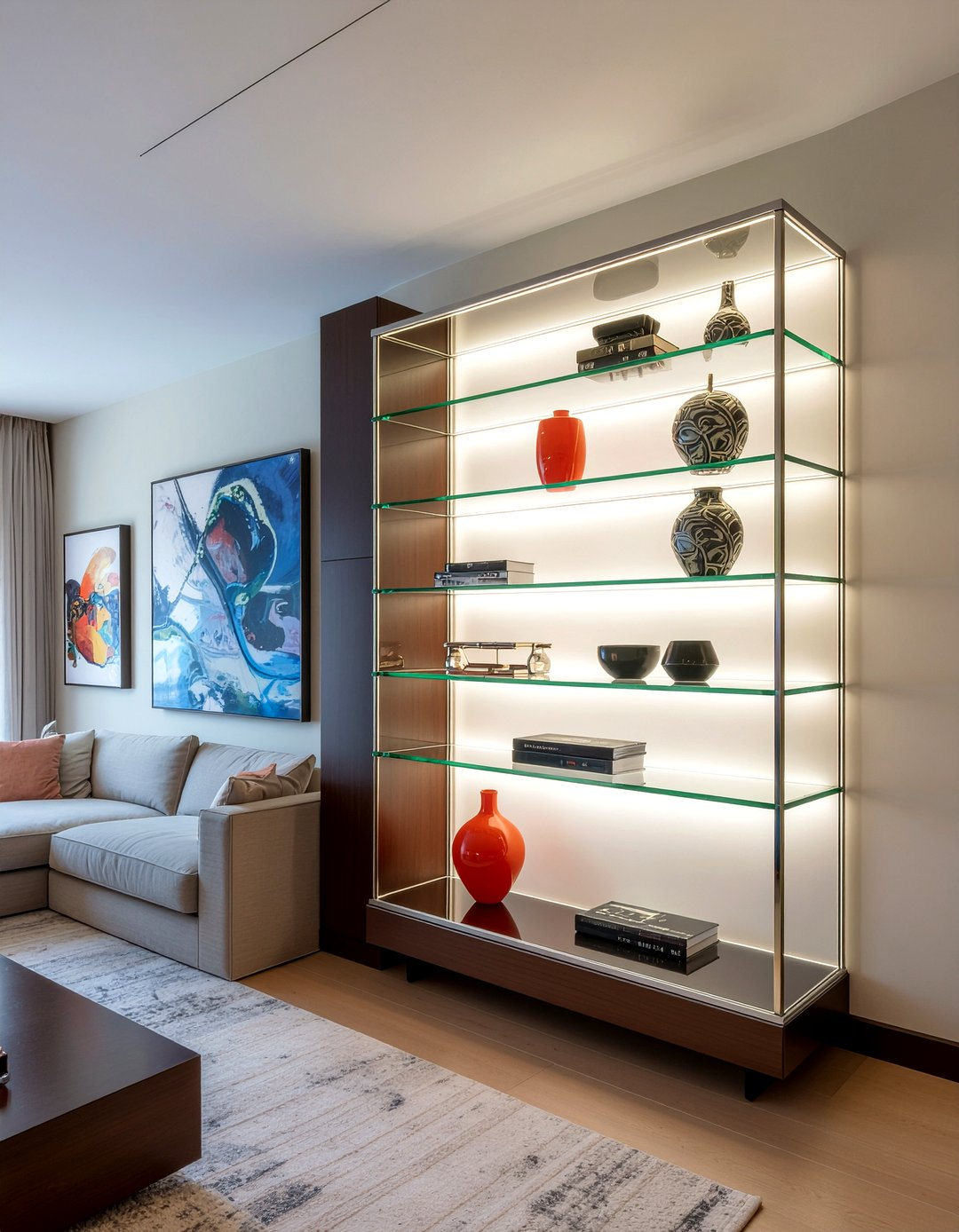
ALT: The Modern Curio Cabinet: How to Style Heirlooms with Contemporary Intent
DESC: Stop treating your display cabinet like a cluttered junk drawer. Learn the specific design principles, lighting techniques, and layout strategies that make modern curio cabinets look expensive and intentional in 2026.
It is 8:00 PM on a Tuesday. You are standing in your living room, staring at the tall, glass-fronted cabinet that has lived in the corner since your grandmother passed. It is beautiful, undeniably. The wood is solid walnut, the hinges are brass, and the glass is thick. But right now, it looks like a mistake. Inside, it is a chaotic jumble of porcelain figurines from three different eras, a stack of old photo albums that don’t fit, and a collection of ceramic cats that have accumulated dust you didn’t realize was there. You feel a pang of guilt. You want to honor the items, but you hate that they make the room feel cluttered and dated. This is the central dilemma of the modern heirloom: how do you display the past without letting it dominate the present?
The answer lies not in hiding the cabinet, but in mastering the art of modern curation. For decades, the prevailing advice for styling curio cabinets was "more is more." Fill every shelf to the brim. Mix every pattern. Let the glass act as a window into a lifetime of accumulation. That era is over. In 2026, the design language has shifted toward intentional negative space, architectural lighting, and a rigorous hierarchy of value. Modern interiors get it right when they treat the curio cabinet not as a storage unit, but as a framed piece of art. The glass is the frame; the objects are the canvas; and the empty space between them is the silence that gives the music meaning.
This guide is not about throwing away your grandmothers’ teacups. It is about editing them. It is about understanding that a well-styled curio cabinet in a modern home acts as an anchor for the room, providing vertical interest and personal narrative without sacrificing the clean lines and calm atmosphere that define contemporary living. We will break down the specific mechanics of this transformation. We will look at the psychology of display, the technical aspects of lighting, and the practical steps to turn a dusty relic into a high-end focal point. If you have ever felt that your collectibles were fighting your interior design rather than supporting it, this is the manual you have been missing.
The Psychology of Negative Space: Why Less Is Actually More
To understand why modern styling works, you first have to unlearn the Victorian habit of maximalism. In the 19th century, the curio cabinet was a sign of wealth and global reach. If you had the money to fill a cabinet with exotic objects, you were successful. Today, the signal has changed. In 2026, wealth and sophistication are signaled by restraint. The modern eye is trained by digital minimalism—clean interfaces, uncluttered desktops, and curated social media feeds. When that eye moves into the physical world, it craves the same clarity.
Negative space, or "white space," is not empty space. It is active space. When you pull objects back and leave gaps on the shelf, you are forcing the viewer’s eye to rest. You are creating a rhythm. If every inch of glass is filled with objects, the eye bounces around frantically, unable to find a point of interest. The result is visual noise. When you leave 30% of the shelf surface empty, the objects that remain become "hero" pieces. They stop being clutter and start being sculpture. This is the fundamental shift in modern curio styling: we are no longer displaying a collection; we are curating a gallery.
This principle applies to the entire cabinet, not just individual shelves. A modern curio cabinet should not look like a warehouse. It should look like a series of small, coherent vignettes. If you have a shelf of blue and white china, do not mix it with a shelf of colorful glass. Group by color, by material, or by era. This creates visual blocks that the brain can process quickly and comfortably. The goal is to make the cabinet feel organized without looking rigid. There should be a sense of ease, as if the objects were placed there by chance, even though the placement was meticulous.
Furthermore, negative space allows the materials of the cabinet itself to speak. If the cabinet is a beautiful piece of furniture—mahogany, oak, or a modern lacquer—filling it to the brim hides that beauty. Let the wood breathe. Let the glass reflect the light of the room. In modern interiors, the cabinet is often a statement piece in its own right. By stripping back the contents, you highlight the craftsmanship of the frame. You invite the viewer to appreciate the joinery, the grain of the wood, and the clarity of the glass, rather than just the things inside it.
Finally, consider the emotional weight of the objects. Heirlooms carry memory. When they are crammed together, their individual stories get lost in the noise. When they are given space, their stories can be heard. A single, well-placed antique pocket watch on a linen-lined shelf tells a story of time and heritage. A pile of watches tells a story of hoarding. Modern styling gives each object the dignity it deserves. It respects the item by isolating it, allowing the viewer to connect with it on a personal level rather than a superficial one.
Lighting as a Design Tool: Moving Beyond the Bulb
Lighting is the single most transformative element in curio cabinet styling, yet it is the most commonly overlooked. Most people open the cabinet, flip a switch, and see a harsh, yellow glow that casts unflattering shadows and makes the glass look dirty. This is a failure of design. In modern interiors, lighting is not just about illumination; it is about atmosphere. It is about highlighting texture, creating depth, and guiding the eye.
The first rule of modern curio lighting is to ditch the single overhead bulb. If your cabinet has a built-in light, check if it can be upgraded. Many modern cabinets come with LED strips or adjustable spotlights. If yours does not, consider installing a battery-operated LED puck light or a small, hardwired track light inside the cabinet. The key is to use a color temperature of 3000K to 3500K, which is warm white but not yellow. This temperature mimics natural daylight and makes colors look true. Avoid anything above 4000K, which feels clinical and sterile, and anything below 2700K, which feels dim and moody.
Directionality is the second critical factor. Light should come from above and slightly in front of the objects. This creates a soft shadow behind each item, adding depth and dimension. If light comes from the front, the objects look flat. If it comes from the back, the objects become silhouettes, which can be dramatic but often hides detail. The ideal setup is a gentle wash of light from the top shelf, cascading down. This mimics the way sunlight hits a room and creates a natural, inviting glow.
For cabinets without built-in lighting, external solutions are powerful. A small, dimmable wall sconce placed next to the cabinet can cast a light that spills onto the glass, highlighting the reflection. Alternatively, a floor lamp with a small shade positioned behind the cabinet can create a backlit effect, turning the glass into a glowing panel. This technique is particularly effective for cabinets with dark wood finishes, as it creates a halo effect that separates the furniture from the wall.
Finally, consider the quality of the light source. High-CRI (Color Rendering Index) bulbs are essential. A CRI of 90 or higher ensures that the colors of your collectibles—whether they are the vibrant reds of a ceramic vase or the deep blues of a glass paperweight—are rendered accurately. Cheap bulbs often have a low CRI, causing colors to look washed out or distorted. In a modern interior, accuracy matters. You want your heirlooms to look vibrant and alive, not faded and dull. Investing in high-quality lighting is an investment in the longevity and beauty of your collection.
The Architecture of the Shelf: Layout and Grouping Strategies
Styling a curio cabinet is an exercise in architecture. You are building a structure out of objects. The layout you choose determines how the viewer experiences the space. In modern interiors, the layout is rarely random. It follows specific patterns that create visual flow and balance. The most common mistake is the "library" approach, where objects are lined up in a row, all facing forward. This looks stiff and institutional. Instead, modern styling uses grouping, layering, and asymmetry to create a dynamic composition.
The "Rule of Three" is a foundational principle. Group objects in odd numbers—three, five, or seven. Odd numbers are more visually interesting and natural to the eye than even numbers. For example, instead of placing two vases side by side, place three, with one slightly taller than the others. This creates a triangle, which is a stable and pleasing shape. Apply this rule to each shelf. If you have a shelf of books, stack three vertically, lean two against them, and add a small object on top. This creates a mini-landscape.
Layering is the second key technique. Objects should not all sit at the same height. Use risers, stacks of books, or small stands to create different levels. This adds depth and prevents the shelf from looking flat. A small antique clock on a stack of three coffee table books, next to a tall ceramic vase, creates a sense of rhythm. The eye moves up and down, across the shelf, rather than scanning a flat line. This technique is particularly effective for cabinets with shallow shelves, as it allows you to display more items without cluttering the surface.
Asymmetry is the third element. While symmetry can be elegant, it can also feel static and formal. Modern interiors favor asymmetry, which feels more relaxed and contemporary. This does not mean chaos. It means that the visual weight on the left side of the shelf is balanced by the visual weight on the right, even if the objects are different. For example, a large, heavy ceramic bowl on the left can be balanced by three smaller, lighter glass objects on the right. The goal is balance, not mirroring. Trust your eye. If one side feels heavy, move an object to the other side. If it feels light, add something.
Finally, consider the "focal point" of each shelf. Every shelf should have one hero object. This is the item that draws the eye first. It should be the most interesting, the most colorful, or the largest. Place it slightly off-center, not in the middle. The other objects on the shelf should support the focal point, not compete with it. If the focal point is a colorful vase, the other objects should be neutral or complementary in color. This hierarchy ensures that the viewer’s eye has a place to rest, and the overall composition feels intentional rather than accidental.
Material Contrast: Mixing Old and New with Intention
One of the most powerful trends in modern curio styling is the deliberate mix of old and new. Heirlooms and collectibles are often from a different era than the rest of the home. Instead of trying to hide this discrepancy, modern interiors embrace it. The contrast between a 19th-century porcelain figurine and a 21st-century abstract sculpture creates a dialogue. It tells a story of time and change. This is where the "modern" in modern styling truly comes into play.
The key to successful mixing is contrast in material and finish. If you have a collection of glossy, colorful ceramics, pair them with matte, neutral materials. For example, place a shiny blue vase next to a rough-hewn stone sculpture or a piece of raw wood. The contrast in texture adds visual interest and prevents the cabinet from looking like a museum display. Avoid mixing too many shiny objects together, as this can create a chaotic, reflective mess. Instead, use matte objects to ground the shiny ones.
Color is another powerful tool for mixing old and new. Do not be afraid to introduce a modern color palette into a traditional collection. If your heirlooms are mostly white and cream, add a single, bold object in a modern color like terracotta, forest green, or cobalt blue. This injects energy and freshness into the display. Conversely, if your collection is already colorful, use neutral objects to create breathing room. The goal is to create a palette that feels cohesive, even if the objects are from different eras.
Scale is the final element to consider. When mixing old and new, pay attention to the size of the objects. A small, delicate antique locket should not be placed next to a large, modern metal sculpture. The scale mismatch will feel jarring. Instead, pair the locket with similarly sized modern objects, such as a small glass sphere or a miniature abstract figure. This creates a sense of harmony and balance. By controlling scale, you ensure that the mix of old and new feels intentional and curated, rather than random and cluttered.
Step-by-Step: The Modern Curation Method
Transforming a cluttered curio cabinet into a modern masterpiece requires a systematic approach. You cannot simply move things around until it "looks right." You need a process. Here is a five-step method that professionals use to style curio cabinets for high-end interiors.
- Step 1 (The Purge and Audit): Remove every single item from the cabinet. Yes, every one. Place them on a large table or the floor. This is the most difficult but most important step. Look at your collection with fresh eyes. Identify the items that are broken, stained, or no longer bring you joy. Donate or discard these. Now, sort the remaining items into categories: by color, by material, or by era. This audit reveals the true scope of your collection and helps you see what you actually have.
- Step 2 (The Selection and Hierarchy): From your sorted groups, select the top 20-30% of items. These are your "hero" pieces. They are the most beautiful, the most meaningful, and the most visually interesting. Set these aside. The rest of the items are your "supporting cast." They are still valuable, but they will play a secondary role in the display. You do not need to display everything at once. Modern styling is about rotation. Keep the best pieces in the cabinet, and store the rest in a closet or basement. Rotate them every few months to keep the display fresh.
- Step 3 (The Base and Texture): Before placing any objects, prepare the shelves. If the shelves are bare wood, consider adding a layer of texture. Use a piece of linen, a small tray, or a stack of art books as a base. This creates a foundation for your objects and prevents them from looking like they are floating. It also protects the wood from scratches. Choose bases that contrast with the objects you will place on them. For example, use a dark leather tray for light-colored ceramics.
- Step 4 (The Composition and Grouping): Using the "Rule of Three" and the "Layering" techniques, arrange your hero pieces on the shelves. Start with the focal point of each shelf. Place it slightly off-center. Then, add two or three supporting objects to balance it. Use risers and stacks to create different heights. Step back and look at the composition. Does it feel balanced? Is there enough negative space? Adjust until the eye moves smoothly across the shelf. Remember, it is better to have too much space than too little.
- Step 5 (The Lighting and Final Polish): Turn on the lighting. Check for harsh shadows or glare. Adjust the position of the objects if necessary. Add small details, such as a sprig of dried lavender or a small stone, to add a touch of nature. Finally, clean the glass. Use a microfiber cloth and a glass cleaner specifically designed for mirrors and lenses. Any smudge or fingerprint will ruin the modern, clean look. Step back one last time. The cabinet should feel calm, curated, and intentional.
Common Pitfalls and How to Avoid Them
Even with the best intentions, it is easy to fall into common traps that undermine a modern curio styling effort. Here are the five most common mistakes and how to avoid them.
- Pitfall 1 (The "Junk Drawer" Effect): This happens when you cram too many small, unrelated objects into one space. The result is visual chaos. Workaround: Enforce a strict limit on the number of objects per shelf. If a shelf feels crowded, remove one object. Use the "three-second rule": if you cannot identify the main object on the shelf within three seconds, the composition is too cluttered.
- Pitfall 2 (The "Museum Shelf" Look): This occurs when objects are lined up in a perfectly straight row, all facing forward. It feels stiff and impersonal. Workaround: Introduce asymmetry and layering. Lean some objects, stack others, and vary the heights. Break the line. The goal is to create a sense of natural arrangement, not a military formation.
- Pitfall 3 (Ignoring the Glass): The glass is the frame of your display. If it is dirty, yellowed, or cracked, no amount of styling will save the look. Workaround: Clean the glass regularly. If the glass is old and yellowed, consider replacing it with modern, low-iron glass, which is clearer and has less green tint. This is a significant upgrade that instantly modernizes the cabinet.
- Pitfall 4 (Color Clash): Mixing too many bright colors without a unifying palette creates visual noise. Workaround: Stick to a limited color palette. Choose two or three colors that complement each other. Use neutral objects to balance the bright ones. If you are unsure, stick to monochromatic schemes, using different shades of the same color.
- Pitfall 5 (Static Display): A curio cabinet that never changes feels stagnant. Workaround: Rotate your collection seasonally. Swap out the objects every three to six months. This keeps the display fresh and allows you to enjoy different parts of your collection. It also prevents the "museum" feeling, as the cabinet becomes a living, evolving part of the home.
Sustainable Styling and the Long-Term Value of Curated Displays
In an era of fast fashion and disposable goods, the curio cabinet represents a counter-trend: the value of keeping, repairing, and displaying. Modern styling is not just about aesthetics; it is about sustainability. By curating your collection, you are extending the life of your objects. You are giving them a purpose beyond storage. This is a form of sustainable design.
Moreover, a well-styled curio cabinet adds value to your home. It is a unique feature that sets your home apart from the generic. Potential buyers or guests will notice the care and intention behind the display. It signals that the home is loved and maintained. In a market where homes are often impersonal, a curated curio cabinet is a powerful selling point. It tells a story of heritage and taste.
From a psychological perspective, a well-styled cabinet reduces stress. Clutter is a major source of anxiety. By organizing and curating your collection, you create a sense of order and control. You are not hiding your past; you are integrating it into your present. This integration is key to a healthy, balanced home. The cabinet becomes a place of peace, not a source of guilt.
Looking ahead, the trend in curio styling is moving toward more interactive and digital elements. Some modern cabinets now feature smart lighting that can be controlled via an app, allowing you to change the color temperature and brightness based on the time of day or the mood of the room. Others have integrated digital screens that can display information about the objects, such as their history or origin. While these technologies are still emerging, they represent the future of curio styling. The cabinet is no longer just a static display; it is an interactive experience.
Actionable Recommendations for the Modern Homeowner
To bring these principles into your home, start small. You do not need to overhaul your entire cabinet overnight. Begin with one shelf. Apply the "Rule of Three" and the "Negative Space" principles to that single shelf. See how it changes the feel of the cabinet. Then, move to the next shelf. Gradually, you will transform the entire cabinet.
Invest in the right tools. A good glass cleaner, a microfiber cloth, and a high-CRI LED light are essential. These are small investments that yield big returns. Do not cheap out on lighting. It is the most important element of the display.
Finally, be patient. Styling a curio cabinet is a journey, not a destination. Your collection will change. Your taste will evolve. The cabinet should evolve with you. Embrace the process. Take photos of your progress. Share them with friends. And most importantly, enjoy the result. A well-styled curio cabinet is a source of pride and joy. It is a reflection of your life, your history, and your taste. It is a modern heirloom in its own right.
The modern curio cabinet is a bridge between the past and the present. It allows us to honor our history without being trapped by it. It invites us to look at our collectibles with fresh eyes, to see them not as dusty relics, but as vibrant, living objects that have a place in our contemporary lives.
As we move further into 2026, the lines between storage and display will continue to blur. Furniture will become more multifunctional, and our collections will become more integrated into our daily lives. The curio cabinet will evolve, but its core purpose will remain the same: to hold our memories and display our passions.
So, go back to that cabinet in the corner. Open the glass door. Take it out, piece by piece. Look at it. Love it. Then, put it back, intentionally. Create a space that feels calm, curated, and uniquely yours. The modern way is not about less. It is about more—more intention, more beauty, and more meaning. Your collection deserves to be seen, not just stored. And now, you have the tools to make that happen.


