
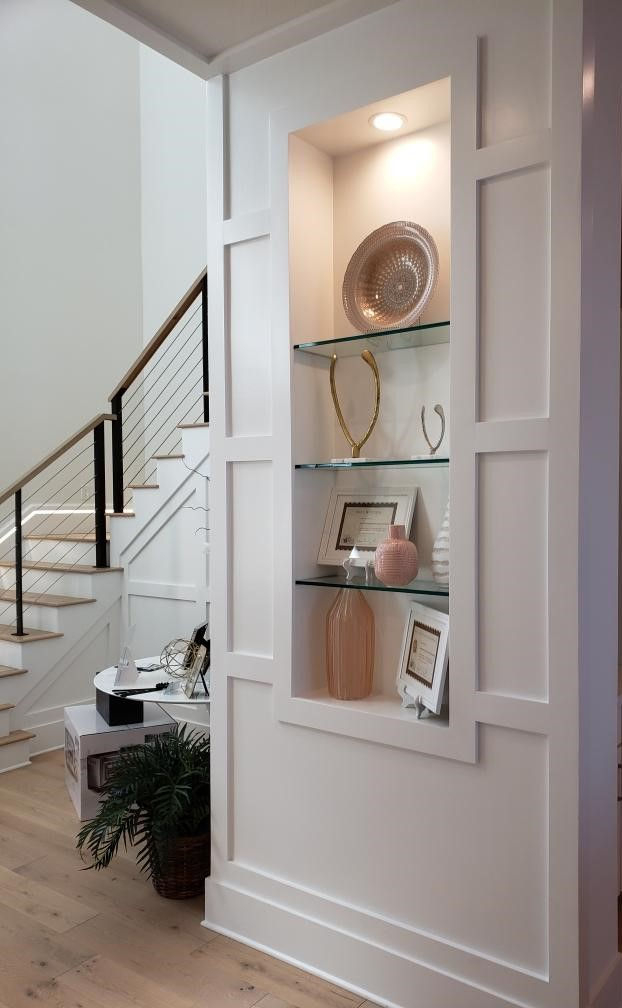
The showroom floor falls silent at twilight, save for the hum of overhead track lighting casting sharp, architectural shadows across an arrangement of minimalist steel-and-glass display tables. A patron steps forward, tentatively resting a hand on the corner of a cantilevered walnut ledge holding an array of high-end ceramic sculptures. The ledge does not flex, shudder, or betray a whisper of structural doubt. Yet, to the eye, the entire assembly appears to defy gravity—a floating plane of wood tethered to nothing more than thin air and ambition. This illusion of weightlessness is not an accident of nature; it is the calculated triumph of modern furniture engineering.
For decades, the creation of display furniture meant defaulting to bulk. If a cabinet needed to hold heavy inventory or precious artifacts, designers reached for thicker panels, doubled-up uprights, and heavy-duty corner brackets. Solid blocks of mass signaled durability. But contemporary spatial design demands a different language. In modern retail environments, boutique hospitality spaces, and residential galleries, heavy frames cast visual noise, crowding out the very items they are meant to showcase. The challenge facing twenty-first-century designers is deceptively simple to state and brutally complex to execute: how do you build a structure strong enough to shoulder heavy loads while making it look as though it might float away on a mild breeze?
The tension between physics and aesthetics forms the silent heartbeat of contemporary furniture craftsmanship. Every milligram of steel shaved from a support post, every reduction in shelf thickness, and every hidden gusset introduces a compromise that must be solved through rigorous mathematical calculation and material mastery. When we look at furniture through the lens of structural engineering, we realize that visual lightness is actually an aggressive exercise in stress management. It requires treating a bookshelf or a retail display fixture less like a static box and more like a bridge or an aerospace truss—where every ounce of material must earn its keep through structural contribution.
The Physics of Illusion and Load-Bearing Integrity
Achieving visual lightness begins with an honest appraisal of how materials behave under stress. Wood, steel, aluminum, and engineered composites possess wildly different mechanical profiles. A piece of quarter-sawn white oak offers tremendous tensile and compressive strength along the grain, but when sliced thin to achieve a delicate profile, it tends to cup, warp, or deflect under sustained loads. Similarly, hot-rolled steel provides immense rigidity, but if left unreinforced in long, slender spans, it will sag under its own weight, let alone the weight of displayed merchandise. The master designer approaches frame design like a chess master, anticipating stress points and planning load distribution long before a single cut is made in the workshop.
Load-bearing calculations in display furniture are governed by strict engineering standards, particularly when transitioning from residential to commercial spaces where safety regulations dictate compliance with rigorous protocols like ASTM tip-over testing. When an upright member is slenderized, its second moment of area decreases exponentially, meaning its resistance to bending drops dramatically unless shape optimization comes into play. This is why modern display units frequently abandon solid rectangular bars in favor of engineered profiles—such as I-beams, T-sections, or hollow structural steel (HSS) tubes. These geometries maximize bending resistance while keeping the visual profile razor-thin, tricking the human eye into perceiving fragility where absolute rigidity actually resides.
Furthermore, center of gravity optimization dictates every millimeter of a design’s footprint. A visually light display shelf cannot afford a heavy base without ruining the ethereal aesthetic, meaning stability must be anchored elsewhere. Designers achieve this by utilizing asymmetric load distribution, internal ballast systems concealed within base plates, or tension-rod systems that tie the display framework directly into structural walls or ceilings. By shifting the load paths away from visible bulk and routing them through high-tensile internal tendons or diagonal bracing hidden in plain sight, the furniture achieves structural equilibrium without sacrificing its floating appearance.
Material Selection and Advanced Manufacturing Synergy
The marriage of material science and digital fabrication has revolutionized what is physically possible in display furniture design. Where woodworkers once relied on bulky mortise-and-tenon joints that required thick timber walls to maintain strength, modern CNC machining and laser-cutting technologies allow for micro-joins and interlocking metal frames that distribute stress across infinitesimal surface areas. Material selection is no longer just about picking a species of hardwood or a grade of steel; it is about choosing materials with high strength-to-weight ratios that can be manipulated at tolerances tighter than a human hair.
Carbon fiber, anodized aluminum alloys, and high-density composite panels have fundamentally rewritten the rules of display architecture. For instance, an extruded aluminum profile can be designed with internal webs and hollow chambers that provide the exact torsional rigidity of a solid steel bar at one-third of the weight. When paired with high-performance acrylics or low-iron tempered glass, these frames disappear into the background, leaving the displayed objects bathed in light. However, working with these advanced materials demands precision. An imperfection in an aluminum weld or a miscalculated tolerance in a glass channel can introduce stress concentrations that lead to catastrophic failure under load.
Beyond raw strength, the interaction between furniture structures and environmental lighting plays a decisive role in perceived visual weight. Display fixtures do not exist in a vacuum; they interact dynamically with ambient and directional illumination. When structural members are kept impossibly thin, they cast minimal shadows, allowing light to sweep uninterrupted across the displayed products. Integrating concealed LED channels directly into the structural skeleton of the display—such as running low-voltage wiring through hollow steel uprights—eliminates unsightly cords and external fixtures. This seamless integration of lighting and structure enhances the illusion that the products are suspended in mid-air, boosting visual appeal and highlighting material textures with surgical precision.
Step-by-Step Methodology for Designing Lightweight, Stable Structures
Translating the delicate balance between structural integrity and visual lightness from a conceptual sketch into a physical reality requires a disciplined, multi-stage engineering workflow. Follow this step-by-step methodology to ensure your display furniture projects remain rock-solid without looking heavy-handed:
- Step 1 (Load Profile and Center of Gravity Mapping): Define the maximum static and dynamic load the display must bear, accounting for asymmetrical product placement. Calculate the exact center of gravity and determine whether stability must be achieved through base weighting, floor anchoring, or ceiling tension systems.
- Step 2 (Material and Geometry Optimization): Select high-strength-to-weight materials such as thin-walled structural steel tubing, extruded aluminum, or engineered wood composites. Replace solid stock with hollow profiles, fluted panels, or perforated webs that maximize bending resistance while shedding visual bulk.
- Step 3 (Joint Engineering and Stress Distribution): Design load-bearing connections that distribute mechanical stress across multiple planes rather than a single pivot point. Utilize laser-cut interlocking tabs, concealed internal dowels, or tension gussets that remain completely hidden from the observer’s line of sight.
- Step 4 (Prototyping and Compliance Testing): Fabricate a full-scale prototype and subject it to rigorous testing protocols, including static load testing and tip-over resistance evaluations. Measure deflection under maximum capacity to ensure slender members do not exceed acceptable sag limits.
- Step 5 (Lighting and Surface Integration): Integrate low-profile illumination channels directly into the structural framework, ensuring that wiring runs invisibly through hollow channels to maintain an uninterrupted, clean aesthetic silhouette.
Common Pitfalls and Field-Tested Workarounds
Even experienced designers occasionally stumble when pushing the boundaries of slender furniture construction. Overlooking the hidden mechanical forces at play can turn an elegant design exercise into an expensive structural failure.
- Pitfall 1 (Underestimating Torsional Flex): Designing a frame with high vertical compressive strength while completely ignoring twisting forces. Workaround: Introduce diagonal cross-bracing, moment-resisting corner gussets, or rigid backing panels that lock the frame geometry in place against lateral loads.
- Pitfall 2 (Ignoring Material Creep in Wood and Composites): Relying on thin-profile wooden shelves that eventually sag under continuous, long-term weight loads. Workaround: Embed hidden steel or aluminum reinforcement rods into a routed channel along the underside of the shelf to provide permanent rigidity without altering the visible wood profile.
- Pitfall 3 (Relying Solely on Friction Fits and Adhesives): Using modern adhesives or simple friction joints to secure heavy display surfaces without mechanical redundancy. Workaround: Always back up high-stress structural joints with mechanical fasteners, pinned dowels, or interlocking shoulder joints that prevent shear failure over time.
- Pitfall 4 (Neglecting Transport and Modular Assembly Stresses): Designing a fragile, lightweight display unit that looks stunning in the studio but snaps or deforms the moment it is disassembled, transported, and reinstalled on a busy retail floor. Workaround: Design knockdown joints with reinforced mating sleeves that guide alignment and absorb assembly wear-and-tear without fatiguing the primary structural members.
- Pitfall 5 (Disregarding Floor Unevenness in Commercial Spaces): Assuming retail or gallery floors are perfectly level, which causes slender, rigid display frames to rock or distribute loads unevenly across their uprights. Workaround: Integrate discreet, heavy-duty adjustable leveling feet into the base of all vertical supports, ensuring total stability regardless of subfloor imperfections.
Holistic Perspectives and Long-Term Impact
The pursuit of visual lightness in furniture design extends far beyond mere styling preferences; it reflects a broader cultural and economic shift toward material efficiency, adaptability, and spatial mindfulness. In an era where commercial square footage commands a premium and residential spaces are increasingly compact, furniture that occupies physical space while conserving visual volume offers immense practical value. By reducing the mass of materials required to build robust display fixtures, designers lower shipping weights, reduce carbon footprints, and minimize the embodied energy of manufactured goods.
Furthermore, modularity and longevity go hand in hand when structural integrity is treated with scientific rigor. A display system that relies on smart engineering rather than brute-force thickness can be easily reconfigured, expanded, or repaired over its lifecycle. When components are standardized and stress loads are accurately distributed, individual parts can be swapped out without discarding the entire assembly. This circular approach to furniture design transforms temporary retail fixtures and high-end residential shelving into long-term investments that adapt to changing spatial needs without losing their structural performance or aesthetic edge.
The economic implications for retail brands and interior architects are equally profound. Displays that achieve maximum visual lightness draw the human eye directly to the merchandise rather than the hardware holding it. When the barrier between the object and the observer is visually dissolved, customer engagement increases, creating a more immersive and high-converting spatial experience. Balancing stability and lightness is, therefore, not just a technical challenge for the workshop; it is a strategic advantage in the modern built environment.
Actionable Recommendations and Key Takeaways
Mastering the art and science of lightweight structural design requires a disciplined adherence to foundational engineering principles combined with a relentless eye for minimalist aesthetics.
- Prioritize Internal Reinforcement: Always look for ways to hide structural support within the object itself—such as routing tension wires through hollow legs or embedding steel spines inside slim wooden shelves.
- Embrace Geometry Over Mass: Utilize engineered profiles like tubes, channels, and folded sheet metal to achieve bending strength without adding visual bulk.
- Test Relentlessly: Never skip physical prototype testing under maximum expected loads, accounting for dynamic forces like shifting merchandise and customer interaction.
- Design for the Real World: Always incorporate adjustable leveling feet and robust, repeatable knockdown joinery to handle the rigors of installation, transport, and imperfect floors.
The silent promise of any great piece of display furniture is that it holds its burden without asking the viewer to worry about the physics keeping it aloft. Achieving this effortless grace is an exercise in profound discipline. It demands that designers think like structural engineers, craftsmen, and minimalists all at once—stripping away every superfluous gram of material while fiercely protecting the underlying integrity of the frame.
As material science continues to advance and fabrication technologies evolve, the boundary between what is structurally possible and what appears visually impossible will only continue to blur. The next generation of display furniture will push slender profiles and floating architectures into entirely new territories. Yet, the core truth will remain unchanged: true elegance is born in the quiet intersection where uncompromising strength meets absolute visual freedom.


