
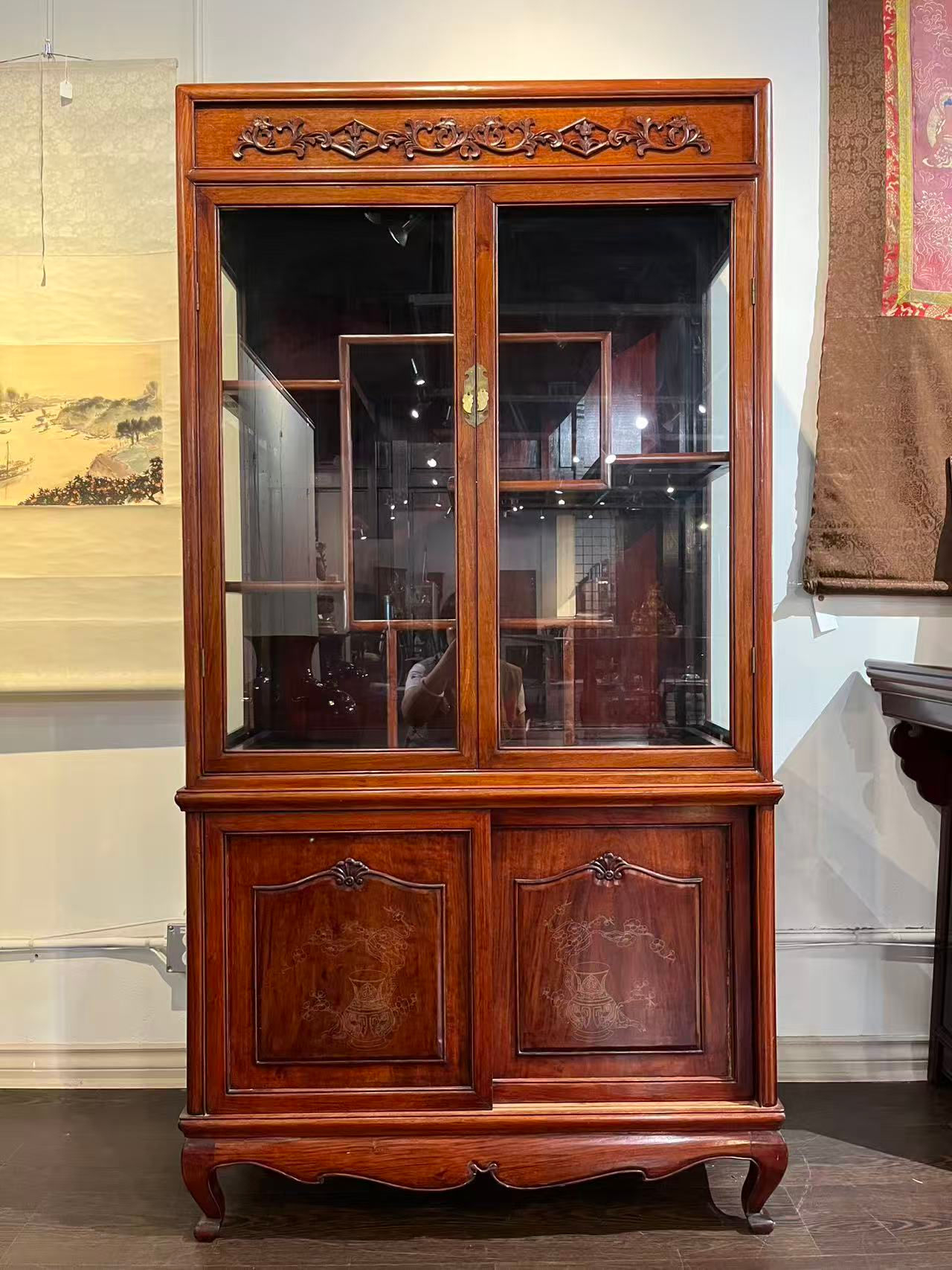
The cool, dense grain of aged huali and zitan wood holds secrets that predate modern interior design by centuries. Run your fingers along the carved apron of a Ming-era horseshoe armchair or the spandrels of a Qing dynasty scholar’s desk, and you are not merely touching timber. You are decoding a silent visual language. To the untrained eye, a dense network of scrolling tendrils, stylized bats, and swimming carp looks like simple ornamentation. To the artisan who chiseled the joints during the Wanli reign, or the scholar who commissioned the piece to anchor his study, every cut was a deliberate incantation. It was a physical manifestation of hope, a structural blueprint for inviting harmony, status, and generational abundance into a household.
For centuries, Chinese cabinetmakers operated at the intersection of structural engineering and philosophical expression. They did not build furniture simply to fill empty corners of a courtyard home. Instead, they constructed functional canvases where Confucian propriety met Daoist mysticism and folk desires for material well-being. A scholar sitting down to write bureaucratic exams or a merchant sealing a maritime trade agreement surrounded themselves with physical reminders of cosmic alignment. Today, as antique markets navigate the complexities of provenance and global curation in 2026, understanding these carved and inlaid symbols transforms how we view historical furniture. It shifts our appreciation from mere aesthetic curiosity to a profound engagement with human history and desire.
The transmission of these visual motifs relied on a sophisticated system of homophones, visual puns, and direct scriptural references. Because the spoken Chinese language is rich in homophones—words that share identical pronunciations but possess entirely different meanings—craftsmen could embed verbal wishes into physical forms. A bat carved upside down did not signify clumsiness; it represented falling or arriving good fortune because the word for bat (fu, 蝠) sounds identical to the word for blessings and prosperity (fu, 福). Decoding this lexicon requires looking past the surface varnish to understand the structural and cultural architecture that shaped every mortise, tenon, and relief carving.
The Philosophical Architecture Beneath the Joinery
Classical Chinese furniture is deeply rooted in the philosophical triad of Confucianism, Daoism, and Buddhism, which collectively dictated the rhythm of daily life and material culture. Confucian values championed social order, hierarchy, and filial piety. This manifested in furniture through strict symmetry, balanced proportions, and clear functional distinctions between pieces meant for the patriarch, the guest, and the domestic staff. A classic Ming official’s hat armchair (guanmaoyi) commands the spine to straighten, embodying the upright moral character expected of a scholar-bureaucrat. The woodwork serves as a physical discipline, aligning the body with Confucian ethical standards while framing the individual within a disciplined spatial hierarchy.
Simultaneously, Daoist philosophy introduced a fluid appreciation for natural cycles, spontaneity, and cosmic harmony. While Confucianism built the rigid skeleton of the chair, Daoism shaped the swirling, organic motifs carved into its panels. Cabinetmakers drew inspiration from knotted pine trees, flowing water, and auspicious clouds (xiangyun). These natural forms were not just decorative flourishes; they represented the Qi, the vital breath of the universe, circulating through the living space. By bringing stylized representations of mountains and rivers indoors, homeowners created a microcosm of the natural world, tethering their domestic environment to the eternal rhythms of heaven and earth.
Buddhism further enriched this visual vocabulary by introducing iconography related to spiritual transcendence, mental clarity, and protection from misfortune. Lotus blossoms rising from muddy waters appear frequently on Buddhist-influenced temple tables and domestic altar cabinets, symbolizing purity of mind and enlightenment. The swastika motif, an ancient Buddhist symbol of auspiciousness and eternal continuity, often forms the geometric lattice work of cabinet doors and window panels. These intersecting spiritual currents ensured that every piece of furniture acted as a multi-dimensional talisman, stabilizing the household physically while elevating the occupants’ spiritual and psychological focus.
Decoding the Lexicon of Wealth, Longevity, and Status
To interpret the visual vocabulary of classical furniture, one must master the specific categories of symbols that recur across centuries of craftsmanship. Animal motifs are among the most expressive. The dragon (long), traditionally associated with the Emperor, represents supreme power, cosmic strength, and transformative protection. When found on private residential furniture rather than imperial commissions, stylized dragons often signify elite status and ambition. Similarly, the phoenix (fenghuang) pairs with the dragon to symbolize marital harmony, imperial grace, and the balance of yin and yang energies within the household.
Flora and fauna combine in clever visual puns to communicate wishes for enduring prosperity. The pomegranate splits open to reveal a multitude of seeds, making it a powerful fertility symbol representing the desire for numerous sons and an unbroken ancestral line. The combination of a goldfish or carp (li or yu) with an archaic coin motif creates a visual pun for liannian youyu—a wish for "surplus and abundance every single year." The fish represents abundance because its name sounds like the word for surplus, while the water plants around it emphasize sustainable, flowing wealth that never runs dry.
Geometric patterns and inanimate objects carry equally potent layers of meaning. The cash coin pattern, featuring a square hole within a round perimeter, represents the ancient Chinese worldview where heaven is round and earth is square. Carved into table aprons or woven into brass hardware, the coin motif directly invokes wealth accumulation and financial stability. The Endless Knot, one of the Eight Auspicious Symbols of Buddhism, weaves without beginning or end, symbolizing eternal happiness, unbroken lineage, and the interconnectedness of all karmic causes and effects within the family estate.
Methodologies for Identifying and Authenticating Motifs in the Field
Examining antique Chinese furniture requires a systematic approach to differentiate between genuine dynastic symbolism, later alterations, and modern reproductions flooding the market. When evaluating a piece, field researchers and collectors must employ a rigorous protocol that evaluates the integration of the carving, the tool marks, and the material wear patterns. Surface decorations should never appear as an afterthought; authentic antique work reveals carvings that were planned as an integral part of the structural joinery from the initial layout of the timber.
- Step 1 (Examine Tool Marks and Carving Depth): Inspect the relief carvings using a jeweler’s loupe or side-lighting to identify hand-chiseled tool marks. Genuine antique carvings display micro-irregularities and depth variations characteristic of manual hand-chisels, whereas modern CNC-routed replicas show uniform, sterile depth and machine-smooth floor beds.
- Step 2 (Analyze Homophonic and Visual Layering): Decode the composition by looking for composite symbols rather than isolated motifs. Identify whether a bat is paired with peaches (symbolizing longevity and wealth) or coins (symbolizing prosperity), which indicates a deliberate, multi-layered blessing rather than random decorative filling.
- Step 3 (Cross-Reference Timber Species with Motif Era): Verify that the wood matches the stylistic era and complexity of the carving. Dense, heavy zitan and native huanghuali from the Ming and early Qing periods typically featured restrained, elegant moldings, whereas later Qing pieces utilized softer woods like elm or northern ash (mu) covered in thick lacquer or elaborate, high-relief carvings.
- Step 4 (Inspect Hardware and Metal Mounts): Check brass or white-copper hinge plates, lock plates, and corner brackets for integrated symbols. Authentic antique brasswork often features engraved bats, flowers, or longevity characters (shou) that match the wood carvings in wear patina and stylistic execution.
- Step 5 (Assess Wear Patina and Structural Integration): Look for natural wear patterns where hands frequently touch the wood, such as drawer pulls, chair arms, and footstools. Auspicious carvings on these high-contact areas should exhibit smooth, softened edges from centuries of handling, proving that the motif is as old as the frame itself.
Navigating Common Misinterpretations and Fabrication Pitfalls
Even seasoned collectors occasionally stumble when interpreting antique Chinese furniture motifs due to historical revivals, composite pieces, and modern market falsifications. One of the most widespread errors is misidentifying stylized bats as butterflies. Because Qing-era artisans frequently abstracted the wings of the bianfu (bat) into symmetrical, undulating curves to fit tight corner spandrels, novices often mistake them for insects. While butterflies carry positive connotations of joy and romantic love, they do not possess the specific financial and longevity blessings tied to the five-bat (wufu) motif.
Another critical risk involves "marriage pieces"—furniture assembled from salvaged antique carved panels married to newly constructed frames. Unscrupulous workshops frequently take genuine Qing dynasty carved bed panels or cabinet doors and mount them onto newly harvested elm carcasses to create faux-antique altar tables or bookcases. This distorts the symbolic narrative, as a panel intended for a bridal bed’s footboard, heavy with fertility and marital symbols, is suddenly thrust into a scholar’s desk or an entryway console where its iconography makes little cultural sense.
- Pitfall 1 (The Butterfly vs. Bat Confusion): Mistaking highly stylized bat carvings for butterflies. Workaround: Examine the head and wing geometry; bats feature distinct facial features and webbing that terminate in hooks, representing the literal contraction of the word fu.
- Pitfall 2 (Composite "Marriage" Furniture): Purchasing pieces where antique carved panels are attached to modern structural frames. Workaround: Inspect the wood grain continuity and shrinkage gaps around the mortise-and-tenon joints to ensure the entire piece has aged under identical environmental conditions.
- Pitfall 3 (Over-Interpreting Modern Reproductions): Assuming every carved piece manufactured after 1950 carries authentic dynastic metaphysical intent. Workaround: Distinguish between ritualistic antique furniture and contemporary decorative export items mass-produced for Western interior markets.
- Pitfall 4 (Misreading Daoist vs. Buddhist Iconography): Confusing secular folk motifs with strictly religious temple iconography, leading to improper placement or historical misunderstanding. Workaround: Study the specific architectural context—temple furniture features distinct lotus thrones and sutra wrappers absent from domestic scholar furniture.
- Pitfall 5 (Ignoring Patina Alterations via Chemical Stripping): Evaluating a piece whose surface has been aggressively stripped and re-waxed, destroying the subtle tool marks necessary for authentic symbol verification. Workaround: Demand uncompromised provenance documentation and analyze subsurface wood pores under ultraviolet light to detect modern chemical treatments.
The Long-Term Preservation and Cultural Resonance of Auspicious Woodwork
The survival of classical Chinese furniture into the current era is a testament to the master joinery techniques of ancient carpenters. Utilizing interlocking mortise-and-tenon joints without relying on metal nails or glue, these pieces were designed to expand and contract naturally with seasonal humidity fluctuations. This structural resilience ensured that the carved symbols of prosperity could endure for centuries, passing from dynastic imperial courts through turbulent modern histories into contemporary global collections. Preserving these artifacts requires maintaining strict environmental controls—stable relative humidity between 45% and 55%—to prevent the dense hardwoods from checking or splitting across delicate relief carvings.
Beyond physical preservation, interpreting these motifs offers a vital bridge to understanding how human societies use material culture to manifest hope and stability. In an increasingly digital world, the tangible weight of a carved rosewood cabinet anchors us in physical reality. The symbols carved into its wood remind us that past generations shared the same fundamental human desires: health for their families, protection from calamity, and enduring financial security. By treating these objects not merely as interior design accents but as primary historical documents, collectors participate in an ongoing dialogue with the artisans who carved blessings into wood centuries ago.
The market for classical Chinese furniture continues to mature as international collectors prioritize authenticity, condition, and deep historical literacy. Auction houses and museums increasingly emphasize the contextual meaning behind the carvings, elevating pieces from decorative curiosities to recognized masterpieces of applied philosophy. As scholarly research uncovers more regional carving styles—from the refined minimalist aesthetics of the Suzhou workshops to the robust, heavily carved traditions of Guangzhou—our ability to read these wooden texts grows richer and more precise.
Core Takeaways for Collectors and Enthusiasts
Mastering the interpretation of classical Chinese furniture motifs requires patience, an eye for detail, and a deep respect for cultural context. Whether you are acquiring your first antique scholar’s chest or simply studying museum collections, keep these foundational principles at the forefront of your methodology:
- Look Beyond Aesthetics: Treat every carved panel, spandrel, and brass mount as a sentence in a visual language designed to communicate wealth, health, and moral integrity.
- Master Homophones: Remember that many auspicious symbols rely on linguistic puns; understanding spoken Chinese phonetic concepts is often the key to unlocking a carved motif’s true meaning.
- Prioritize Structural Integrity: Ensure that the carved symbols are organically integrated into the original joinery rather than glued onto modern replacement panels.
- Respect Material Authenticity: Learn to recognize the tactile qualities, weight, and natural aging patina of classical hardwoods like huanghuali, zitan, and old-growth northern elm.
- Contextualize Your Collection: Research the specific regional workshop traditions and historical eras from which a piece originates to accurately interpret its symbolic intent.
The study of classical Chinese furniture motifs is ultimately an exercise in empathy across time. When we trace the deep relief of a five-bat border or decode the intertwined geometry of an archaic coin lattice, we are meeting ancient craftsmen and scholars on common ground. They looked at raw timber and saw an opportunity to shape their destiny, carving prayers for prosperity and longevity into surfaces they touched every day.
As we move forward, the responsibility of stewardship falls upon contemporary collectors, curators, and historians. Protecting these objects means safeguarding the stories they carry within their grain. By looking closer, questioning provenance more rigorously, and respecting the philosophical foundations of ancient Chinese joinery, we ensure that these silent wooden testaments continue to speak clearly to future generations.


