
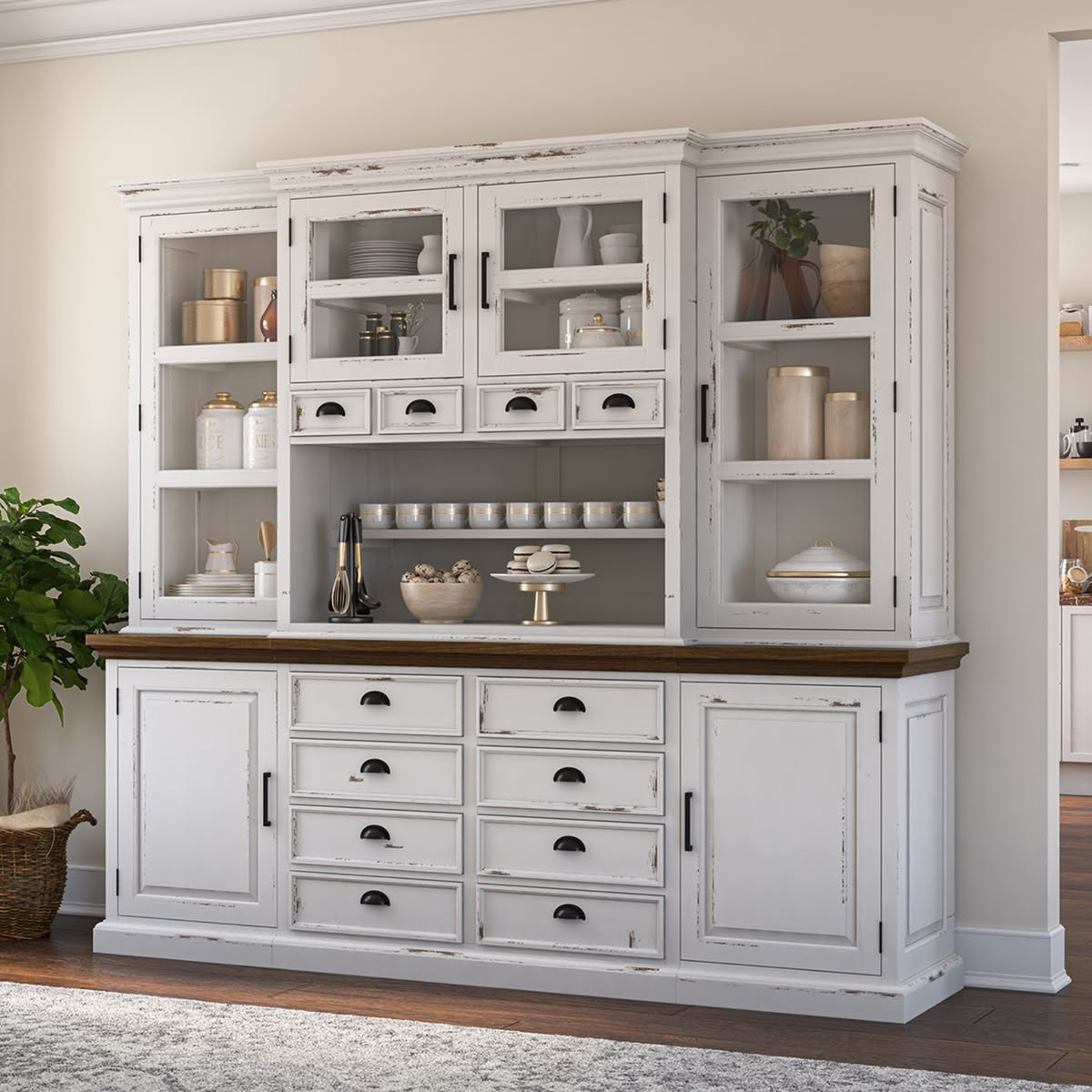
There is a strange secret about dining rooms and home storage. You walk into a store and the person behind the counter points to a massive wooden cabinet and calls it a buffet. You ask about the smaller one, and they say it is a sideboard. Then you see the tall stack of cabinets and they call that a hutch. But walk into a different store, and the names get swapped around entirely. It is enough to make your head spin.
I have spent years talking to people who are just trying to fit a tablecloth or a few plates into a new room. They don’t care about technical definitions. They care about whether the thing they buy will actually fit through the door and hold their holiday china. The truth is, these pieces are often the same thing, just dressed up for different jobs. Or maybe they are just different sizes of the same idea.
Let’s be honest. The names are confusing. But once you understand the real differences, you can stop guessing and start designing a home that actually works for you.
The Real Story Behind the Names
So, why do we have so many names for what looks like the same cabinet? It mostly comes down to how people use the furniture and where they put it. Think of it like clothing. You might wear a "jacket" to the office and a "blazer" to a wedding, but they are both outer layers. The terms change based on the context.
A sideboard is often the catch-all term. It is the workhorse of the dining room. You will see it described as a piece that sits against the wall, offering a flat top for serving food and storage below for dishes. It is usually lower to the ground, sometimes with short legs or none at all. This makes it perfect for smaller spaces where you need that counter space without it feeling like a wall is blocking your view.
Now, take that same piece of furniture and put it in a big dining room where you plan to serve a feast. Suddenly, the salesperson might call it a buffet. The word comes from the French "buffet," which means a table for serving food. So, when it is doing the job of serving, it is a buffet. If it is just sitting there holding napkins in a hallway, it is a sideboard. The wood is the same. The drawers are the same. The only thing that changes is the role it plays in your life.
Size Matters: Buffets vs. Sideboards
When you are standing in the showroom looking at rows of cabinets, the biggest clue is usually size. This is where the confusion starts to clear up. If you need a lot of storage and a wide surface for staging a buffet line, you are looking for a buffet. These are the heavy hitters. They are long, they are deep, and they take up space. They are designed to make a statement in a large dining area.
Sideboards tend to be the opposite. They are often more compact and visually lighter. You will find them in narrow hallways, small dining rooms, or even living rooms. Their depth is usually narrower than a buffet, which makes them a popular choice for areas where you just don’t have room for a massive piece. A sideboard gives you that extra surface for a lamp or a vase without overwhelming the room.
Here is the thing though. Some people say the main difference is just that buffets are larger. Others argue it is about the legs. A buffet often has longer, more visible legs, giving it a lighter, more open feel. A sideboard might have very short legs or sit flush against the floor with cabinets extending all the way down. It is about the silhouette. If you have a small room, a long, tall buffet might crush the space. A sleek sideboard will glide right in.
The Hutch: The Tower of Storage
If the sideboard is the workhorse and the buffet is the showman, the hutch is the architect. A hutch is not really a separate piece of furniture on its own. It is an upper shelving or cabinet unit that sits on top of a lower storage piece, like a buffet or a sideboard. This is a detail many people miss. I have heard families call the whole dining room unit a hutch, but technically, the hutch is just the top part.
This two-part system is a game changer for storage. The bottom part holds the heavy stuff: platters, linens, and maybe even a wine fridge. The top part, the hutch, is for display. You can put your best china on open shelves, display a collection of art, or add decorative lighting. It draws the eye up, making the room feel taller and more grand.
Most hutches lean toward a traditional style. You will see more decorative details, ornate craftsmanship, and carved wood. But times are changing. In 2026, we are seeing hutches that are less bulky and ornate than they were in the past. They are becoming sleeker, fitting into modern homes better. Whether you need to store cutlery in the drawers under the counter or just want a place to show off your grandmother’s silver, the hutch adds that extra vertical storage you didn’t know you needed.
Where Does Your Piece Belong?
Now that we know the shapes, let’s talk about rooms. The location dictates the best choice for your specific layout. If you have a formal dining room that sees a lot of use, a full buffet with a hutch might be the perfect statement piece. It gives you the surface area for a holiday feast and the storage for all the guests’ plates.
But what if your dining room flows into the kitchen? Or what if you have a small apartment with no separate dining room? That is where the sideboard shines. Its narrower depth makes it a popular piece for use in other rooms, like a living room, where there isn’t enough space for the depth of a buffet. You can use it as a media console, a entryway table, or a bar cart. It is incredibly versatile.
You might also find a sideboard in a home office. It provides a place to stash papers and supplies while offering a nice surface for a coffee station. The key is to match the piece to the traffic flow. Don’t put a massive buffet in a tight hallway. Don’t put a tiny sideboard in a room where you need to set up a buffet for twenty people. Think about how you live, not just how the furniture looks in a picture.
Style, Depth, and the Modern Twist
Let’s get into the nitty-gritty of design. When you are shopping in 2026, you are going to see a lot of variations. The classic sideboard might have doors that extend all the way to the floor, hiding everything inside. This is great if you want a clean, minimalist look where you don’t want to see the clutter. The top provides extra counter space when you need it, and during parties, it becomes your buffet table.
However, some styles prefer open shelving. This is common in hutches. You get the storage but you also get the display. The main difference between a buffet and a sideboard can also be about the legs. A buffet with longer legs feels more airy. A sideboard with no legs feels more grounded.
Depth is another huge factor. A sideboard is typically narrower. This is why it fits in tight spaces. A buffet is deeper, allowing for more storage inside the cabinets. If you are storing a lot of serving platters, you need that depth. If you are just storing a few books, the shallow sideboard is better.
And let’s not forget the modern trend. While traditional hutches are still popular, today’s styles tend to be less ornate and bulky. People want furniture that looks good in 2026 and won’t feel out of place in ten years. The lines are cleaner. The handles are simpler. The wood is more natural.
Making the Right Choice for Your Home
So, how do you decide? It comes down to your specific needs. If you need a lot of storage space, opt for a buffet and hutch. It is the heavy-duty choice for big families or people who love to entertain. If you need less storage but large display space, a sideboard might be the better choice. It is elegant, functional, and fits almost anywhere.
Remember, the room layout is everything. Measure your wall. Measure your doorways. Think about how you will use the space. Do you need a place to serve food? Do you need to hide your electronics? Do you want to show off your collection? The answers to these questions will tell you which piece is right for you.
Don’t get hung up on the name. Call it what you want. If you have a buffet with a hutch on top, it is a buffet and hutch. If you have a sideboard that you use for serving, it is a buffet. The furniture is just a tool to help you live better. Pick the one that fits your life, not the one that fits the dictionary.
Choosing the right storage piece doesn’t have to be a puzzle. Whether you are drawn to the classic elegance of a hutch, the spaciousness of a buffet, or the sleek utility of a sideboard, the goal is the same. You want a home that feels organized, beautiful, and ready for whatever life brings.
Take your time. Look at the pieces in your own home. See what works and what doesn’t. The names might be confusing, but the function is simple. It is about having a place for your things and a surface for your life. With the right piece, your dining room or hallway will finally feel complete.
[sps_html tag=”img” src=”https://marcpauze.com/wp-content/uploads/2026/04/bramble-genoa-buffet-with-hutch-white-distressed-farmhouse-buffet-throughout-farmhouse-kitchen-dining-hutch-and-buffet.jpg” alt=”Bramble Genoa Buffet With Hutch White Distressed | Farmhouse Buffet … throughout Farmhouse Kitchen Dining Hutch And Buffet” style=”width: 100%; height: auto;”]
[sps_html tag=”img” src=”https://marcpauze.com/wp-content/uploads/2026/04/meriden-solid-mahogany-wood-dining-room-farmhouse-buffet-with-hutch-intended-for-farmhouse-kitchen-dining-hutch-and-buffet.jpg” alt=”Meriden Solid Mahogany Wood Dining Room Farmhouse Buffet With Hutch … intended for Farmhouse Kitchen Dining Hutch And Buffet” style=”width: 100%; height: auto;”]
[sps_html tag=”img” src=”https://marcpauze.com/wp-content/uploads/2026/04/pajaro-large-white-farmhouse-kitchen-buffet-hutch-cabinet-dining-room-throughout-farmhouse-kitchen-dining-hutch-and-buffet.jpg” alt=”Pajaro Large White Farmhouse Kitchen Buffet Hutch Cabinet | Dining Room … throughout Farmhouse Kitchen Dining Hutch And Buffet” style=”width: 100%; height: auto;”]
[sps_html tag=”img” src=”https://marcpauze.com/wp-content/uploads/2026/04/white-farmhouse-hutch-and-buffet-for-how-adjustable-shelving-inside-amish-made-hutches-solves-the-china-storage-dilemma.jpg” alt=”White Farmhouse Hutch And Buffet for How Adjustable Shelving Inside Amish-Made Hutches Solves the China Storage Dilemma” style=”width: 100%; height: auto;”]
[sps_html tag=”img” src=”https://marcpauze.com/wp-content/uploads/2026/04/oildale-farmhouse-solid-reclaimed-wood-dining-buffet-with-hutch-with-regard-to-how-adjustable-shelving-inside-amish-made-hutches-solves-the-china-storage-dilemma.jpeg” alt=”Oildale Farmhouse Solid Reclaimed Wood Dining Buffet With Hutch with regard to How Adjustable Shelving Inside Amish-Made Hutches Solves the China Storage Dilemma” style=”width: 100%; height: auto;”]


